
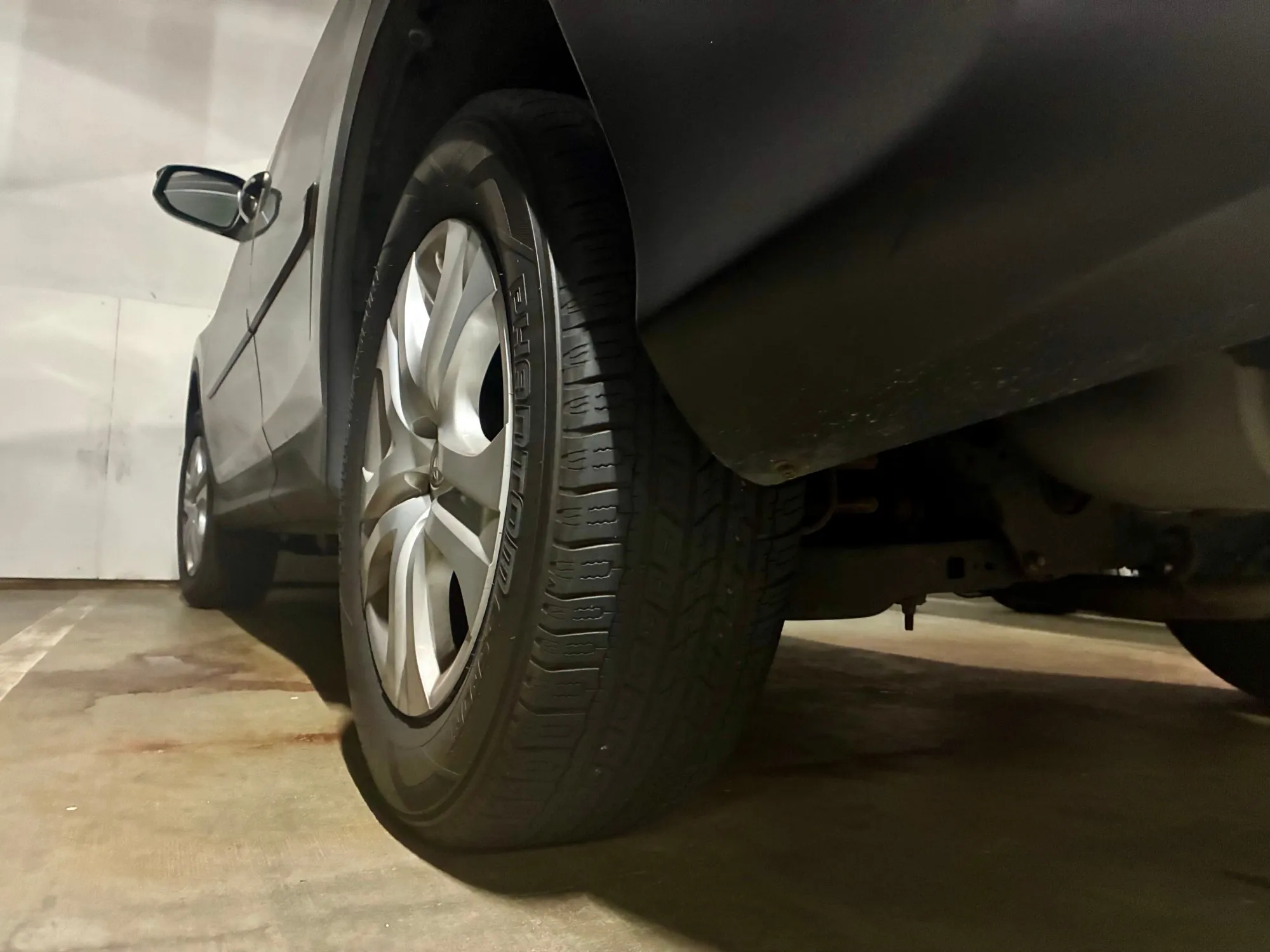
California has jumped into the tire-oversight business.
The California Energy Commission on Monday unanimously approved the nation’s first efficiency standard for replacement tires for passenger vehicles and light-duty trucks.
Read more What beats seeing eclipses from space? Try the northern and southern lights
The commission is confident the new regulations that start in 2029 will save drivers in the Golden State billions of dollars in fuel costs and reduce carbon dioxide emissions.
But some tire makers and auto industry groups say the mandate will increase the costs of replacement tires and make 70% of tires currently on the market in California obsolete in seven years.
How it will work
Tires on new vehicles are designed to give drivers better fuel mileage. But replacement tires tend to be less efficient and drivers lose mileage — and in the case of electric vehicles, lose range.
The new standards aim to make sure replacement tires are as at least as energy efficient as tires on brand new cars, SUVs, pickup trucks and EVs. The replacement tires may be more expensive but the energy commission estimates drivers will save money in the long run on gasoline and electricity costs.
“This action will help Californians save approximately $1 billion a year on refueling while reducing pollution and extending the range of vehicles on the road,” CEC chair David Hochschild said in a statement.
The commission predicts the new rule will reduce carbon dioxide emissions by 2 million metric tons per year — the equivalent of taking about 400,000 gasoline-powered cars off California’s roads and highways.
The first phase of the regulations start in 2029. The incremental during that time, the CEC says, will come to $1.50 per tire. In phase 2, which runs from 2033 and beyond, the incremental cost will increase to $6.50 per tire.
A typical driver of an internal combustion engine vehicle with efficient tires will save $179 in gasoline over the life of a set of tires, the CEC says. That’s based on a gas price of $4.60 per gallon. As of Tuesday, the average price for a gallon of regular in San Diego stood at $5.68, so by the CEC’s reckoning, the savings would be even greater.
The commission conducted laboratory tests and says its analysis shows the regulation will result in no “adverse tradeoffs” with regard to replacement tire lifespan, safety or other characteristics.
Working with tire manufacturers and trade groups prior to Monday’s 5-0 vote, the CEC carved out exemptions to the regulation for specialty tires such as competition tires, all-weather winter performance tires and large off-road tires.
Support and opposition
Nancy Skinner, one of the CEC’s five commissioners, said the higher price of replacement tires will be more than offset by the financial savings in the long run.
“Obviously, whatever type of standard we do is going to cost the manufacturer a little bit to meet it,” Skinner told Ashley Zavala of KCRA-TV. “We want to make sure that that delta of the increased cost of the product is small enough that the consumer still reaps a huge savings.”
The Consumer Federation of America supported passing the regulation, as well as a range of environmental groups.
Read more Chargers face uncertainty after center Tyler Biadasz’s knee injury
“Having inefficient tires causes your car’s engine to work harder and burn more gas,” said Chris Chavez, deputy policy director at Coalition for Clean Air. “This pollutes our air and costs you money.”
A major tire manufacturer also came out in favor.
“We support the efficiency goals and believe the proposed thresholds in this rulemaking are technically feasible within the defined timeframes,” Michelin North America’s director of state and local government affairs, Francesca Mosteller, said in a statement.
But other tire companies and trade groups opposed the new rule.
In an April 24 letter to the CEC, Goodyear, Yokohama, the California Tire Dealers Association and others predicted the cost of replacement tires would increase by about $6 to $10 per tire and that tires required under phase 2 “are typically priced hundreds of dollars more per set than baselinealternatives.”
The letter described the regulation as a “one size-fits-all approach (that) is particularly problematic given the cost impacts involved.”
The Pacific Research Institute, a Pasadena think tank that advocates for free-market solutions to policy issues, criticized the mandate as regulatory overreach.
“Where does it stop? It seems like there’s no corner of our lives where they think they can’t become involved,” said Kerry Jackson, the group’s William Clement Fellow in California Reform. “I know (the CEC has) a number out there of what they think it’s going to save the consumer, but I don’t think this ever turns out the way they want it to.”
Skinner, in her interview with KCRA, said, “Well, we regulate hair dryers, TVs, refrigerators, all kinds of appliances, right? And tires are really not much different.”
Before her appointment to the energy commission last year, Skinner served in the state Senate from 2016 to 2024 and the Assembly from 2008 to 2014. Representing the East Bay and Berkeley, the Democrat carved out a niche in the statehouse for introducing and promoting environmental and climate legislation.
Moving forward
Some manufacturers complained that 70% of current tire inventory would not meet the 2033 standards required in phase 2 of the regulation.
But CEC officials say there are already replacement tires available today that meet the standards and tire companies “will have many years to adjust the design of tires” that don’t meet the new requirements.
Ivan Drury, senior manager of auto insights at Edmunds, said he would not be surprised if some drivers will simply buy tires in neighboring states, especially when making trips to, say, Nevada or Arizona.
“I think that for some people, their natural visceral gut reaction would be, ‘I’m opposed to this,’ and do something like that,” Drury said. “Because it’s something in which you could just kind of circumvent the rules if you wanted to. It’s like, what kind of enforcement’s going to be put in place?”
The framework for the new rule goes back more than 20 years.
Assembly Bill 844, passed in 2003, directed the CEC to adopt a replacement tire efficiency program, but it was delayed and sat idle until commission staff in November 2020 instituted an informational proceeding to obtain data, get comments from stakeholders and make recommendations.
Read more Dan Albano’s Orange County football preseason Top 25 rankings