
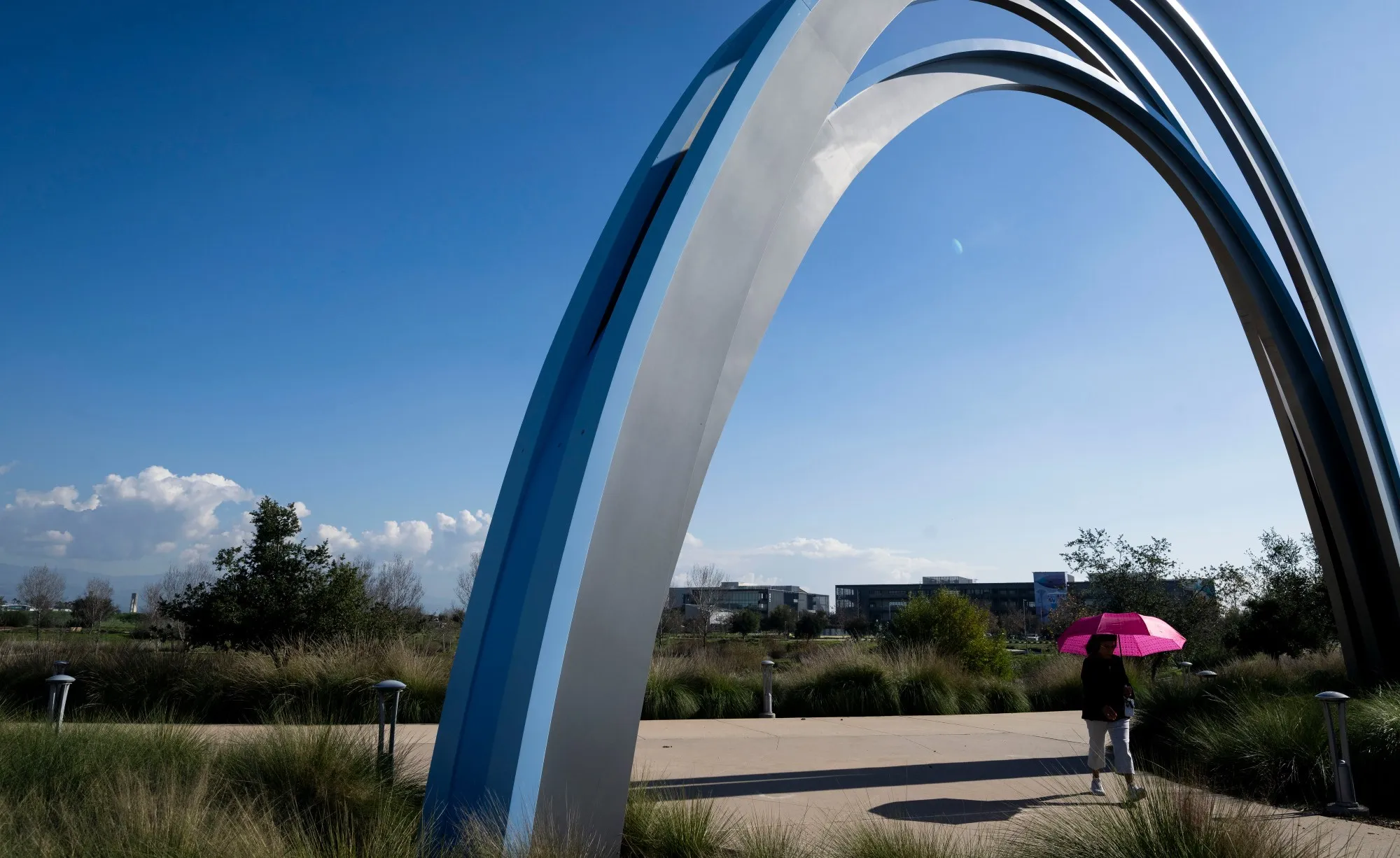
More than 30 years after planning started for life after the closure of the Marine Corps air station, the city’s vision for Tustin Legacy, one of its largest and longest-running redevelopment efforts, is becoming reality.
Read more HOA Homefront: Can we require director training?
In July, city leaders authorized staff to prepare and release a competitive offering for the historic south hangar and portions of the surrounding property, seeking prospective users, investors or development partners to plan for its future. The massive World War II-era blimp hangar is the only one of the base’s two hangars still standing, after a fire destroyed its northern counterpart in 2023.
The formal solicitation is expected to open later this fall, according to a staff report, with the city’s offering memorandum scheduled for release sometime between October 2026 and January 2027.
The move came a month after the city officially ended the local state of emergency in June, which had remained in place for roughly 950 days in the aftermath of the north hangar fire, a blaze that not only burned through the historic military landmark, but also spread ash and other harmful materials into the Tustin community.
Much of the shuttered Navy-owned, 1,600-acre base has been transferred to public agencies, with a major portion going to the city of Tustin — designated as the Local Reuse Authority by the Department of Defense in 1992. The city now acts as the lead local planner for redevelopment following the base’s closure in 1999.
Acres that have been subleased or transferred to other agencies include 40 acres for the Tustin Unified School District, 15 acres to the Rancho Santiago Community College District and 66 acres to the South Orange County Community College District.
The Navy still owns key pieces of the property, including a roughly 85-acre parcel and the south hangar, which has added challenges to the planning process.
But the Navy-owned parcels are just one part of the larger redevelopment vision for Tustin Legacy, with the city weighing its options over who will develop remaining portions of the former base, what those developments will look like and how much land will ultimately be devoted to more parks, housing, commercial uses and other public amenities.
That broader redevelopment was the focus of the city’s annual Local Reuse Authority meeting, held Tuesday, Aug. 18, inside the AMC theater at The District at Tustin Legacy.
The meeting included a half-hour film providing updates on several Tustin Legacy projects, followed by an open house-style setup with visual displays and community partners stationed outside the theater.
Read more Trump warns of ‘economic D-Day’ against Iran, but Tehran is well acquainted with sanctions
Those updates included information on the Orange County Rescue Mission’s Village of Hope, South Orange County Community College District’s Advanced Technology Education Park, or ATEP, and Rancho Santiago Community College District’s criminal justice academy, which is looking into a future expansion.
Other city-led development and park projects were also mentioned, including infrastructure projects aimed at building bridges, literally, connecting the former military base to new housing, commercial development and public recreation areas.
Residents also pressed the City Council over what that growth would mean for people who live outside the immediate Tustin Legacy area, with some raising concerns about preserving the area’s military history, traffic, parking and whether enough fire protection is in place at the south hangar to avoid what some residents described as another preventable disaster.
Responding to those concerns, Mayor Austin Lumbard said the annual LRA meeting and the ensuing discussions are part of the city’s efforts to incorporate feedback from residents into planning considerations.
“This is part of that process,” Lumbard said as he addressed the crowd.
He said the city has done “extensive” outreach, adding that a professional communications firm has focused on reaching the community through virtual and online options, as well as through texts and emails. The firm, JPW Communications, also helped lead the city’s outreach, which included open-house workshops, surveys, pop-up events and Spanish-language engagement aimed at reaching residents who might not otherwise take part in the process.
“We are collecting all that data, ultimately shaping the community that you all, that we all, will enjoy now and in the future,” Lumbard said.
Also up for discussion is the Navy-owned Parcel 18, which at one point was slated to become a regional park but, despite more than two decades of planning, never came to fruition after the county was unable to secure funding. In 2021, acting in its LRA capacity, the city of Tustin revised the federal reuse plan, removing the proposed county regional park from Parcel 18 and opening the door to other options.
The 85-acre stretch of land, now also under consideration, includes four concrete corner pillars and a damaged slab foundation, which are all that remain of the north hangar.
According to city staff, broader framework planning for the remaining portions of Tustin Legacy is considering how future development could be balanced with parks and other public uses, with possible park elements ranging from open space and active recreational areas to sports fields, trails, playgrounds and even aquatic features.
Read more Court slashes $50M judgment against Infowars’ Alex Jones over falsely calling school shooting a hoax