
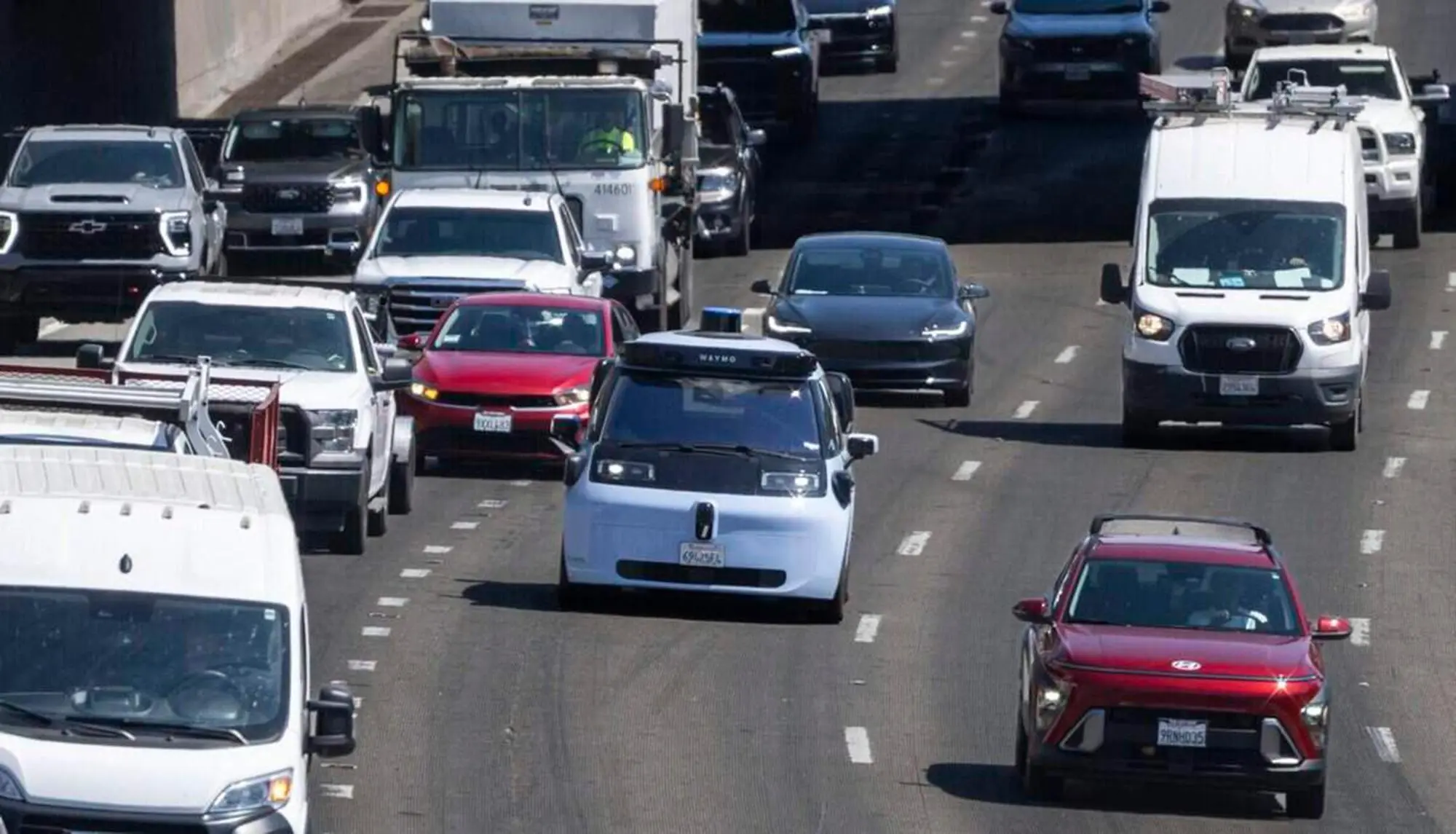
The California Department of Motor Vehicles has indefinitely restricted Waymo from operating or testing its driverless cars on the state’s freeways following a recent incident on Interstate 280 in San Francisco, captured on video showing one of the autonomous vehicles trying to get around California Highway Patrol cruisers attempting to slow traffic.
Read more Proposal ends in heartbreak when 4-carat ring swept away in waves
In issuing the restriction, the DMV also cited another incident in which three Waymo autonomous vehicles entered an active construction closure on Highway 101 near Burlingame.
“The department determined that Waymo’s driverless freeway operations pose an imminent hazard to public safety due to recurring incursions by its vehicles into active construction zones where construction workers, vehicles and equipment are present,” the DMV said Tuesday, “despite a prior restriction and corrective actions implemented following similar incidents that occurred on May 18, 2026.”
The DMV said the restrictions took effect Nov. 11, and that it “will remain in place until Waymo demonstrates to the department that it has taken effective corrective actions to address the deficiencies that precipitated the restrictions.”
Waymo, based in Mountain View, said in a statement Tuesday that “safety is at the foundation of everything we do.”
“In alignment with our safety-first principles, we have also temporarily restricted freeway operations across our other operating markets to evaluate our performance,” Waymo said. “Our ride-hailing service continues to operate safely on surface streets, serving over half a million trips each week. We are working with the California DMV and other state officials diligently and responsibly to resume freeway operations.”
Waymo launched the country’s first consumer driverless taxi freeway service in November 2025 in the Bay Area, Los Angeles and Phoenix, a goal of the Alphabet Inc. unit since Google launched its autonomous vehicle project in 2009. The company expanded its Bay Area service in May into the San Jose neighborhoods of Willow Glen and Vista Park, as well as the West Valley cities of Campbell and Cupertino.
Waymo continues to operate as normal on surface streets. While the California DMV order is limited to freeways in California, Waymo has proactively restricted freeway operations in other states as well.
Waymo cites safety data showing its autonomous vehicles have a 95% reduction in crashes resulting in serious injuries compared to human drivers. The company says its vehicles are 14 times safer than human drivers in avoiding crashes that injure pedestrians. Waymo says it’s the only autonomous driving technology company in the world that makes its performance data available, downloadable, and analyzable for the public.
Before Waymo may resume its freeway operations in the state, the company must provide sufficient evidence that its vehicles can safely detect and respond to construction zones, emergency vehicles and other roadway situations.
Read more Parents unaware Orange daycare was giving ‘sleeping gummies’ to preschoolers, lawsuit claims
Once that evidence is submitted, the DMV will review Waymo’s corrective measures and determine whether freeway operations may safely resume. If the DMV is not satisfied that the deficiencies have been corrected or if additional facts come to light showing that Waymo’s freeway operations continue to pose an imminent hazard, the restrictions will remain in place.
Waymo said that while freeway testing is restricted, it will continue freeway testing with trained autonomous specialists.
The DMV said California’s autonomous vehicle regulations, updated in April, are the strongest in the nation. Waymo has been involved in the rulemaking process and has sought more flexibility to address perceived safety concerns.
State Sen. Dave Cortese, a San Jose Democrat who chairs the Senate Transportation Committee, said he’d watched the video, seen by millions on social media, of the Waymo trying to get around CHP vehicles in San Francisco, and found it concerning. He recalled a recent road trip back home from Sacramento when police vehicles came up behind his car at high speed pursuing another speeding vehicle, and wondered whether autonomous vehicle technology is sophisticated enough yet to tell the difference between a law enforcement and civilian vehicle on the road.
“I think the video was very telling with respect to how much further Waymo needs to go, and autonomous technology needs to go, to get to the point of understanding all the nuances they’re going to be coming across on the road,” Cortese said. “You look at that and realize it could have been a horrific tragedy.”
Cortese said he appreciates Waymo’s impressive safety record, but noted that the big question is what happens in the small percentage of cases where Waymo underperforms human drivers, and that “it’s appropriate that the state administrative agencies are holding them accountable.”
“There’s no margin for error,” Cortese said. “They’re learning on publicly shared roads and highways, and I think we’re right to have a degree of concern about that, until they perfect what they’re doing and I think they will perfect it.”
San Mateo County Supervisor Dave Canepa said the DMV’s hard line with Waymo underscored the seriousness of the incident.
“Waymo had to pump their brakes, and that’s not a bad thing,” Canepa said. “Not to say they can’t get the technology better, but when you get the DMV to weigh in the way they weighed in, it’s pretty clear that they don’t think it’s safe.”
Read more Cambridge Dictionary chooses ‘human’ as word of the year in response to AI fears