
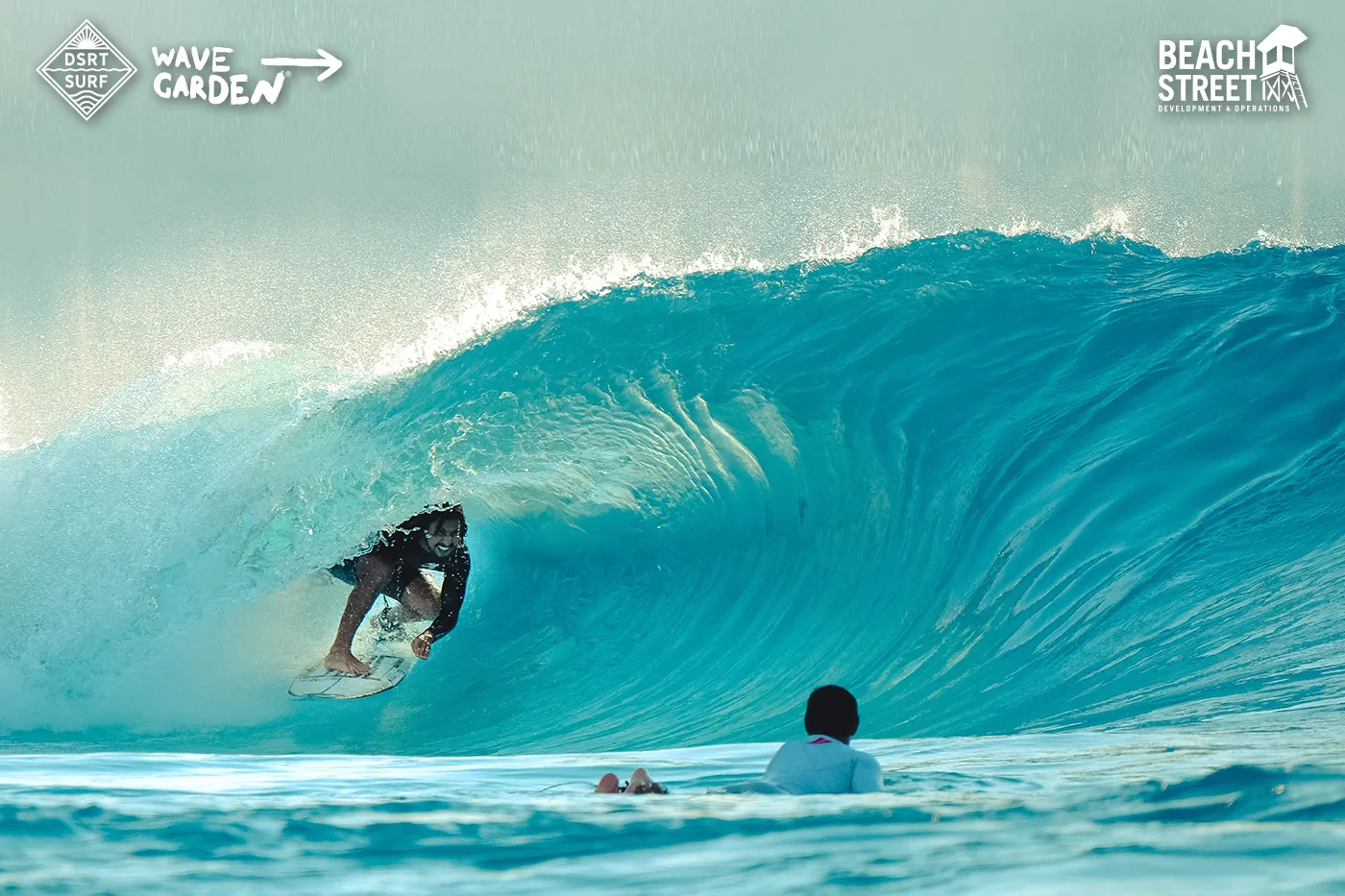
There’s a buffet of waves officially on offer in the desert.
DSRT Surf officially opened its calendars to the public for reservations on Thursday, Sept. 24, after a long-awaited debut this summer that has been years in the making.
Read more ACLU sues ICE in LA seeking records on use of full-body restraint suits
The wave pool in Palm Desert has two sections that can hold up to 28 surfers on each side, though in some sessions like the “pro barrel,” fewer surfers will occupy the pool.
The pool, using Endless Surf technology, is said to be able to deliver 1,000 waves per hour and is being described as the largest of its kind in North America.
Do you want big carves and critical turns? That will cost you about $290. Prefer barrels? Getting pitted will be about $370 to $380 an hour.
Going to DSRT Surf during weekdays will shave off about $20 on price. But want to rent out the whole wave pool, offering both lefts and rights? That will run you a cool $19,000 for an hour.
DSRT Surf has been more than a decade in the making, one of several wave pool projects popping up across the country and in Southern California, already known for its wave-rich coastline.
Similar Wavegarden Cove technology is being used in Virginia Beach, led by Beach Street Operations, the same group behind the Palm Desert project.
The project is the latest evolution in Southern California’s surf landscape, where changing technology and a desire among surfers for consistent, uncrowded waves have made man-made waves more attractive. For novices, wave pools offer a controlled setting before hitting the beach.
Read more Here’s why it can take a long time to extinguish a lithium battery fire
The DSRT Surf project follows the opening of the Palm Springs Surf Club in 2024, a smaller operation built in a former Wet ‘n Wild water park. Another private wave pool in nearby La Quinta at Coral Mountain Desert Club, called Thermal Beach Club, broke ground last month and is expected to open in 2028.
Ocean Kamp is under construction in Oceanside.
The pool at DSRT Surf boasts a 9 million-gallon lagoon. The entire project site is 17.8 acres nestled between the two iconic Desert Willow golf courses.
Job fairs were held through the summer as operators put final touches on the resort. Already, pro surfers and industry insiders have been testing out the pool in recent weeks, with clips showing them riding waves in the crystal-clear waters.
The Wavegarden Cove technology being used has settings for barrels, long intermediate rides or soft beginner waves. Size, shape, height of the wave, length, frequency, power and speed can all be customized.
Wavegarden has been a leader in creating man-made waves, with its first project, Surf Snowdonia, opening in the United Kingdom in 2015. Since then, it has built pools around the world, including in Australia, Switzerland and Brazil.
The idea of man-made wave pools is not a new concept, with attempts as far back as the ’80s. But instead of mimicking the ocean, early waves rushed like a river toward a surfer, making them more novelty waves. It was only in recent years that technology caught up to provide surf-worthy rides.
There will be a learn-to-surf program with rolling, mellow waves available, and a main wave that will draw more experienced surfers. The waves will be ordered from a menu before the session.
Read more Lakers transition from ‘LeBron Era’ to a Luka Doncic-led squad
The entire space can accommodate 3,500 people.
A second phase is expected to add a 139-room resort hotel and 57 villas.
For more information: dsrtsurf.com