
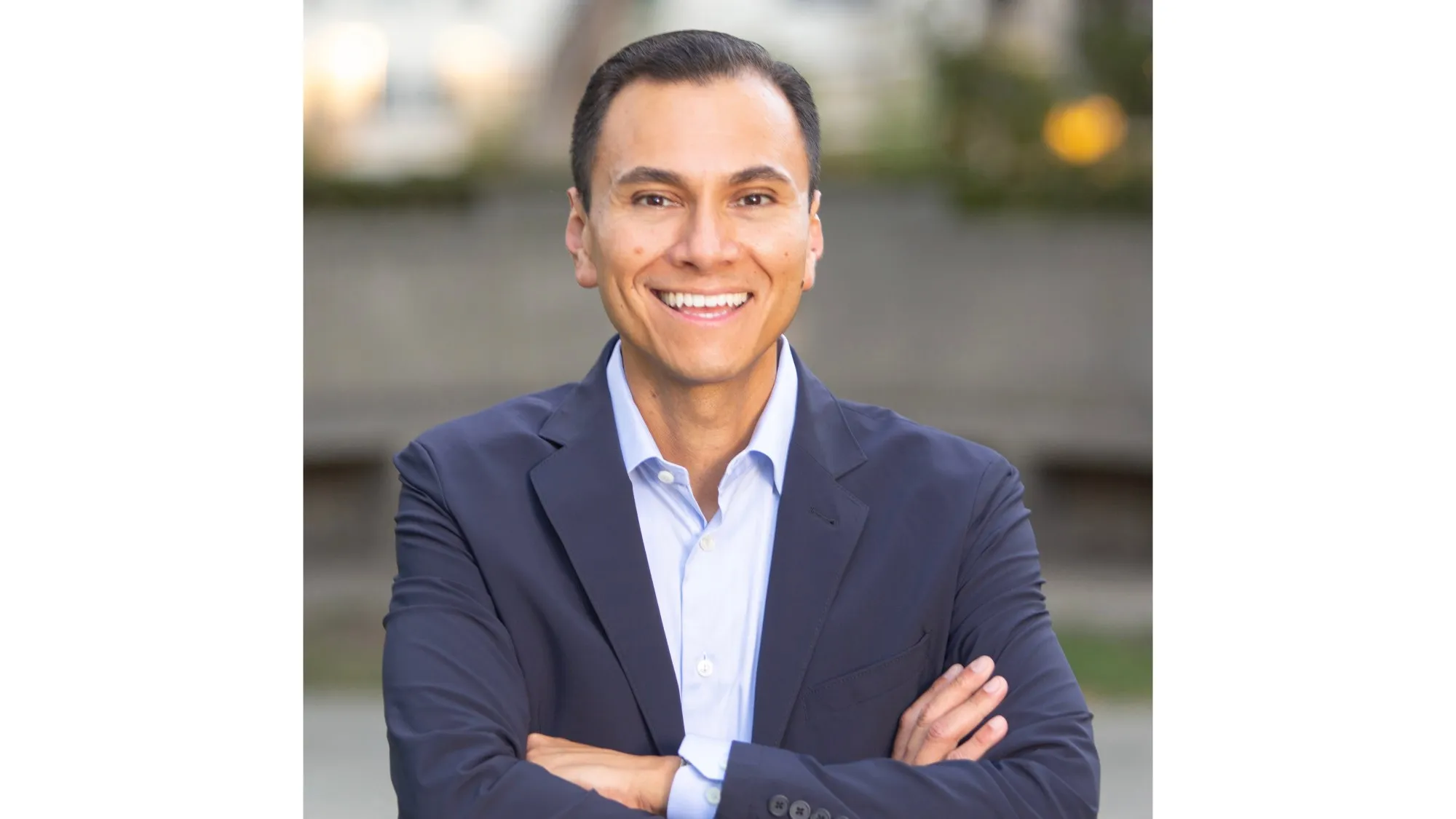
Ahead of the November general election, the Southern California News Group compiled a list of questions to pose to the candidates who wish to represent you. You can find the full questionnaire below.
Name: Edgar Montes
Age: 45
Current job title: Director, Center for Innovation in College Admission
Incumbent: No
Other political positions held: None
City where you reside: Rancho Santa Margarita
Campaign website or social media: dredgarmontes.com
What are the top two needs of your school district, and how are you prepared to address them? (Please answer in 200 words or fewer.)
When I decided to run for school board, I started by listening. I have spent time talking with parents, educators, and community members about what is working in SVUSD and where we can do better.
SVUSD has a strong foundation. We should celebrate high graduation rates, improving mathematics performance, dedicated educators, and the breadth of academic, college, career, arts, and enrichment opportunities available to students. We must build on those strengths while being honest about where we can do better.
First, we must ensure every student is engaged, supported, and achieving. District data shows continued needs around student engagement, chronic absenteeism, and uneven outcomes for some student groups. Strong averages should never keep us from asking who is thriving, who isn’t, and why.
Second, we must sustain excellent schools, educators, and opportunities as enrollment and resources change. That requires responsible stewardship, protecting what works while focusing resources where they can make the greatest difference.
Over 23+ years in education, I’ve learned that lasting improvement starts by listening to those closest to students, looking carefully at evidence, and bringing people together around solutions. As a dad of two current SVUSD students, that work is also deeply personal to me.
To you, what is the role of a school board in education? Is it driving policy, being involved in curriculum, something else entirely? (Please answer in 200 words or fewer.)
I believe a school board’s job is to govern well, not manage the district from the dais.
Board members set direction and policy, approve and oversee the budget, hire and evaluate the superintendent, monitor student outcomes, and remain accountable to the community. We should ask difficult questions about curriculum, programs, and results without trying to become the classroom teacher, principal, or superintendent.
I also believe good governance begins with listening. California’s emphasis on local control places meaningful engagement with students, parents, educators, classified staff, administrators, bargaining units, and other educational partners at the heart of decision-making. Before consequential decisions are made, we should actively seek different perspectives, examine the evidence, and understand the potential impact. It’s what we ask our students to do: listen, think critically, consider different viewpoints, and make informed decisions.
My approach is: Listen. Learn. Lead.
Listen to those closest to our students. Learn from their experiences and the evidence. Then have the courage to lead, even when decisions are difficult, with transparency and accountability.
I would bring an open door and an open mind to the board. We may not always agree, but people should know they were heard, understand how decisions were reached, and trust that students remained at the center of them.
How do you feel artificial intelligence is, or isn’t, safe in the classroom? In what instances should it be expanded in the classroom? What about when it should be limited? (Please answer in 200 words or fewer.)
I’ve spent much of my career working in education and thinking about how schools adapt to change. In my current work as a national leader working to reimagine K-12 education, college admissions, and workforce readiness, I’m also seeing how quickly AI is changing what students will encounter after high school. For me, that makes AI less of a technology question and more about whether we’re preparing students for their future.
I don’t think ignoring AI is realistic, but I also don’t think we should use it simply because it’s available. Students should learn when AI can help them explore an idea, get feedback, be creative, or access information, and when doing the work themselves is an important part of learning.
As a former school counselor, I also believe strongly in the human side of education. AI should never replace a teacher’s judgment, a student’s own thinking, or the relationships that are so important to learning and growing.
We need reasonable, age-appropriate expectations around privacy, academic integrity, accuracy, and responsible use.
Ultimately, I want SVUSD students to understand AI well enough to use it, question it, and recognize its limitations, and to know when to trust their own thinking and judgment.
How do you believe schools can better teach or engage students in civil discourse? How would you like to see your district tackle this issue? (Please answer in 200 words or fewer.)
Over the years, I’ve learned that listening is a skill, and one I’ve had to continually sharpen. I learned it as a middle child, a school counselor, working with students and families, and later working alongside school districts across California and the country. I learned it in a different way as a statewide leader, partnering with county offices, districts, schools, and educators with very different communities and perspectives to help implement California’s MTSS framework. Those experiences taught me that you can’t build trust or solve difficult problems without first taking the time to understand where people are coming from.
I think students need opportunities to develop that same skill. They should discuss difficult issues, ask questions, examine evidence, explain their thinking, and be willing to reconsider it when they learn something new. Understanding another person’s perspective doesn’t require agreeing with it.
Those skills can be practiced across a student’s education, not just in civics or government.
Read more Lan Quoc Nguyen, Garden Grove Unified School District Area 2 candidate, 2026 election questionnaire
Adults also have to model them. As a board member, I want to be able to sit across from a parent, student, educator, or community member who strongly disagrees with me, listen with respect, ask questions, and try to understand their perspective.
If we want our students to become better listeners, we have to show them what that looks like.
Some school districts around California are recruiting teachers by building subsidized housing. How would you suggest your district could better attract — and retain — educators? (Please answer in 200 words or fewer.)
I’ve worked in schools, led educators, and I’m married to a middle-school counselor. So when I think about attracting and retaining great educators, I think about more than vacancy rates. I think about what makes someone want to come to SVUSD, build a career here, and continue doing this incredibly important work year after year.
Compensation and benefits matter, especially given Orange County’s cost of living. I would be open to exploring creative housing partnerships and other approaches if they make sense financially for SVUSD and if the data and feedback from current and future educators support it.
But in my conversations with educators, I’ve also heard how much working conditions matter — class sizes, workload, growing student needs, time to collaborate, strong leadership, and feeling that their professional expertise is valued. Parents I’ve spoken with want great teachers in their children’s classrooms and want us to keep them here.
As a board member, I would make meeting regularly with educators and staff part of how I lead. I want to understand why people choose SVUSD, why they stay, why they leave, and what we can realistically do better.
I want SVUSD to be a district where excellent educators feel supported, respected, and excited to build their careers.
What experiences and priorities do you bring to this role? What have you learned in prior leadership roles that makes you the person for the job? (Please answer in 200 words or fewer.)
Education has shaped nearly every chapter of my life. I was a first-generation college student who went on to serve as a university admissions counselor, school counselor, county education administrator, nonprofit executive, statewide systems leader, and now a national education leader. Each of those roles has allowed me to see education from a different perspective. Today, I experience it from perhaps my most important one: as the dad of two current SVUSD students.
Across more than 23 years in education, I’ve learned the importance of meeting people where they are and listening to those closest to students. They often understand both the challenges and possible solutions in ways that aren’t always visible from a boardroom.
I saw this firsthand while leading California’s statewide Multi-Tiered System of Support efforts. Working with county offices, districts, schools, and educators across the state reinforced for me that lasting improvement rarely comes from adding another isolated program. It comes from listening, bringing people together, and building better systems around students, educators, and families.
My priorities are student success, excellent educators and schools, meaningful family engagement, responsible stewardship, and preparing students for their futures.
I would bring significant experience to the board, but that experience has taught me to ask better questions, not to assume I have all the answers. I want to listen first, look beyond averages to understand who is thriving and who isn’t, whose voice is not being represented, bring people together around what we learn, and then turn that learning into action.
If your campaign had a mascot, what would it be and why? (Please answer in 200 words or fewer.)
Our campaign already has the perfect mascot: Mr. Coco Channel, our 17-year-old Cockapoo.
Coco was our first “child,” long before our two children came along, and he has been a faithful member of our family ever since. At 17, he has taught us quite a bit about loyalty, patience, forgiveness, friendship, and unconditional love.
Those aren’t bad qualities for a school board candidate, either.
Coco doesn’t care about titles or résumés. He’s simply happy to see you, quick to forgive, and always ready to be by your side. There is something wonderfully grounding about that.If I could bring a little more of Coco’s spirit into public service—being faithful to the people I serve, giving others grace, welcoming people warmly, and sticking together even when things get difficult—I think that would be a good thing.
So while the apple may be the symbol of my campaign, Mr. Coco Channel is definitely its mascot.
Bonus question: What is the best book you’ve read this year? Explain why you found it compelling.
The best book I’ve read this year is “Reset: How to Change What’s Not Working” by Dan Heath.
What stayed with me most was Heath’s idea that meaningful improvement doesn’t always require another program, more resources, or wholesale change. Sometimes it starts with identifying the right “leverage points,” the places where focused effort can make the greatest difference. That resonated with me because I’ve spent much of my career working on continuous improvement in education. One thing I’ve learned is that strong organizations don’t change simply for the sake of change. They take the time to understand what’s working, where people are getting stuck, and where a thoughtful change could have the greatest impact. I think that lesson applies particularly well to public education. We should celebrate and protect what’s working while still being curious enough to ask where we can do better. That’s what I appreciated most about “Reset.” It’s ultimately a hopeful book: improvement doesn’t always mean starting over. Sometimes it means seeing what is already in front of us differently and being thoughtful about where we focus our attention and effort.
Read more Southern California power customers urged to conserve as heat stresses grid