
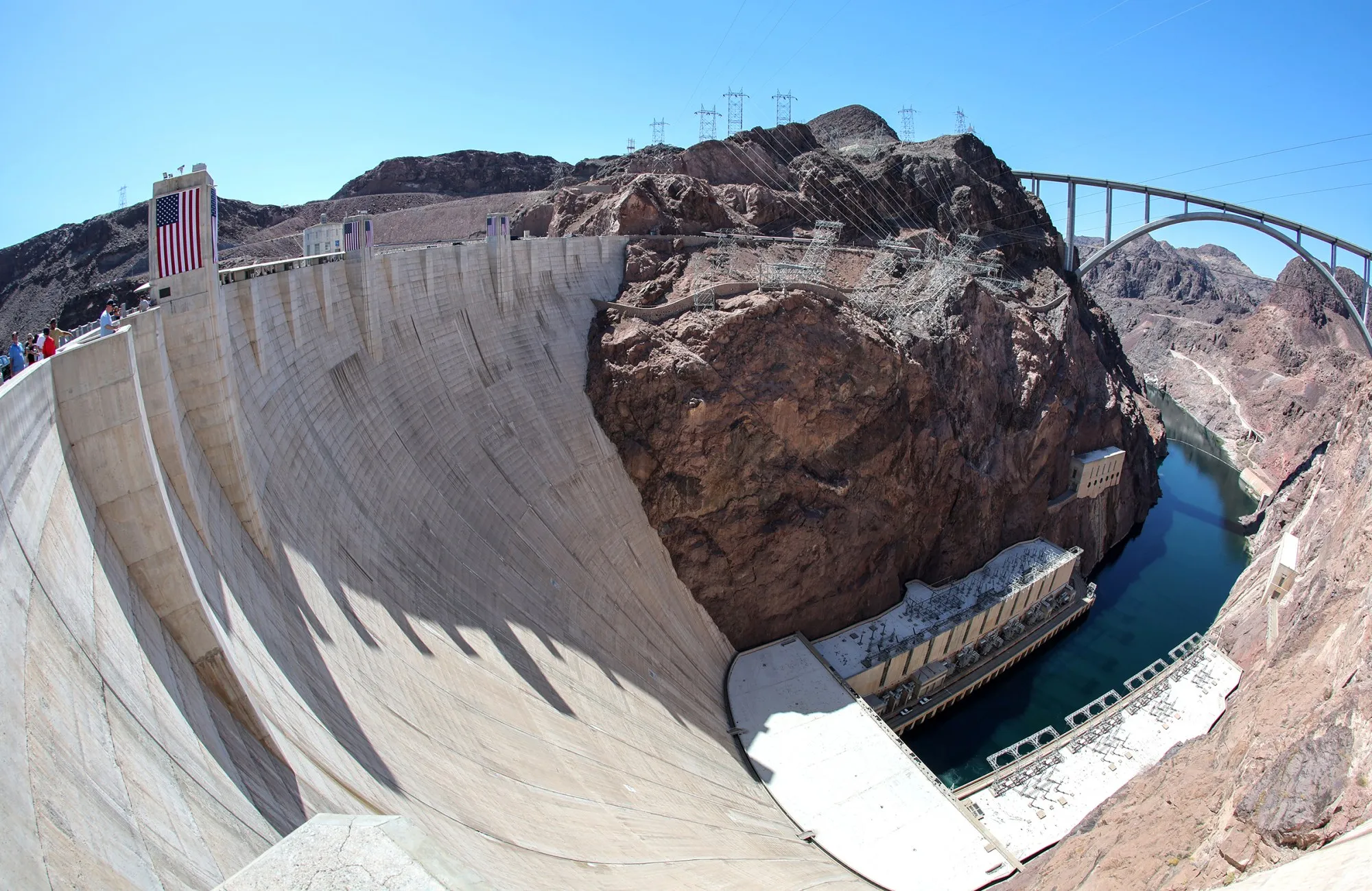
Powerhouse
Today we look at the Hoover Dam, which has been generating electricity for 90 years and paved the way for development in Las Vegas, Arizona and Southern California.
Read more Nuclear power could more than triple by 2060, UN agency says
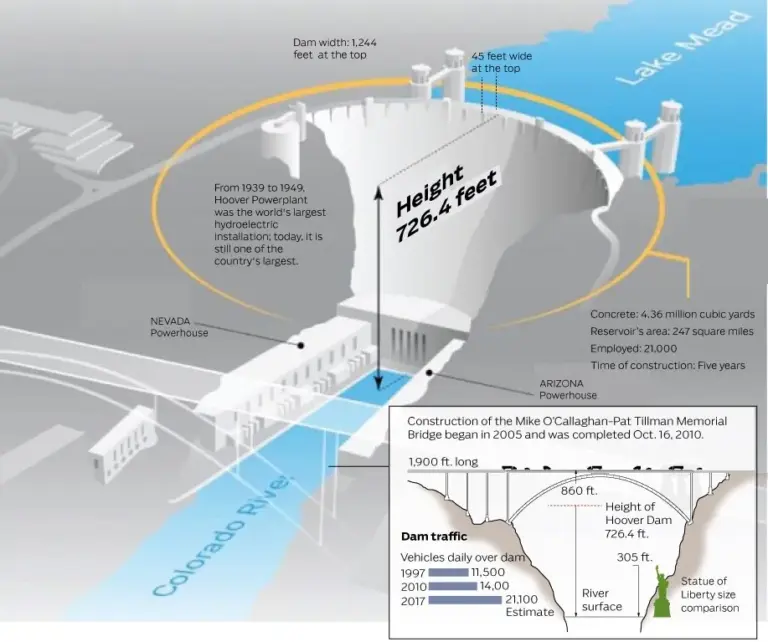
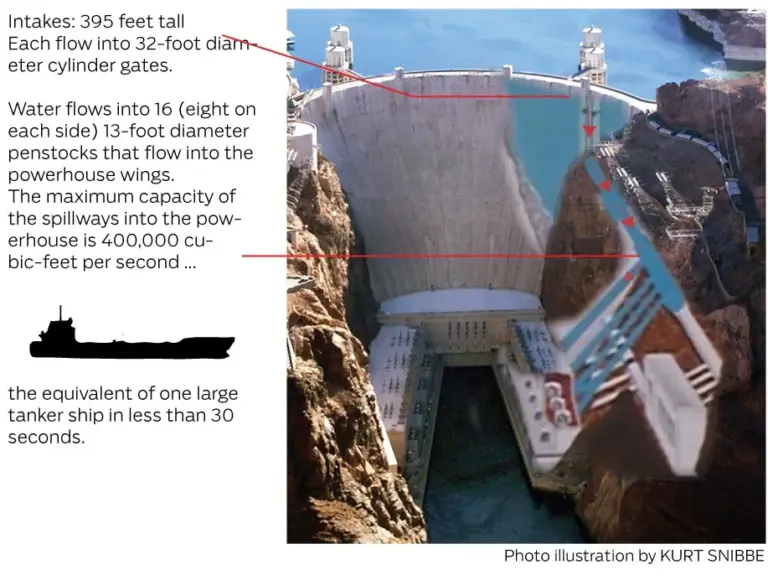
Hoover Dam generates, on average, about 4 billion kilowatt-hours of hydroelectric power each year for use in Nevada, Arizona and California – enough to serve 1.3 million people.
Building the transmission lines to Los Angeles took three years from 1933 to 1936 and was a historic feat of engineering managed by the Los Angeles Bureau of Power and Light. When completed the lines stretched 266 miles transmitting electricity at 287,500 volts — a higher voltage than any other long-distance transmission line in the world at the time.
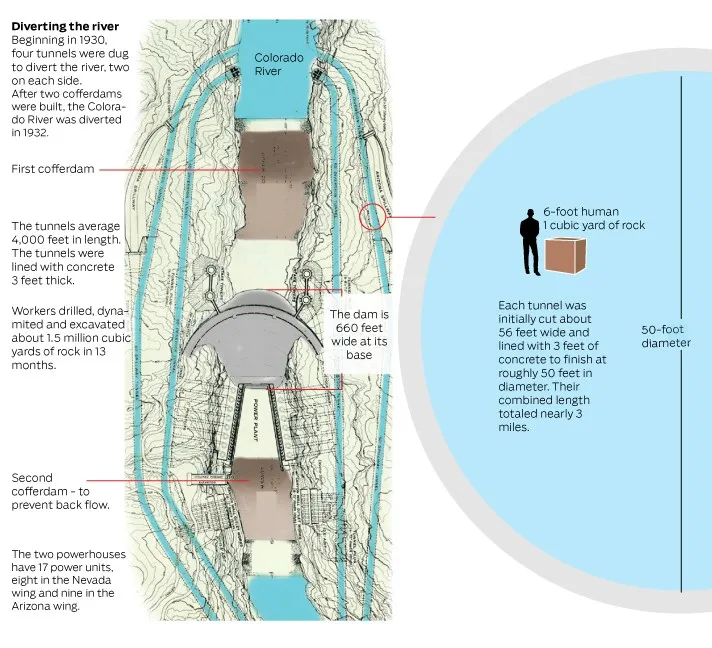
The project had seven construction camps spaced roughly 30 miles apart. Temperatures routinely reached 135 degrees in the summer and concrete footings were poured at night to prevent fracturing or boiling.
Sept. 11, 1936: President Franklin D. Roosevelt activated the dam’s first small 3,500-horsepower station service generator during a remote ceremony at the World Power Conference in Washington, D.C.
Oct. 9, 1936: The dam officially began commercial power transmission, sending electricity over 266 miles of lines to L.A.
Oct. 26, 1936: The first major commercial electric generator went into full regular operation.
Efforts to control the Colorado River had been disastrous in the early 1900s with earthen dams and levees collapsing and wiping out towns and agribusiness.
Originally called the Boulder Dam, more than 200 engineers looked for a structure to control the massive river flow and use it for energy.
In 1931 the federal government awarded Six Cos. Inc. of San Francisco the winning bid for the job, $48,890,995. Six Cos. was a joint venture of companies in Utah, Los Angeles, Idaho and Oregon.
It is the second tallest dam in the U.S. behind California’s Oroville Dam, (770-feet tall, finished in 1968).
Read more Man who fatally struck deputy after his son was killed by Cincinnati police is convicted of murder
Electric power supply
The Bureau of Reclamation reports that the energy generated under the contracts ending in 2017 were allocated as follows:
Agency | Percentage
MWD of Southern California | 28.53%
State of Nevada | 23.37%
State of Arizona | 18.95%
Los Angeles | 15.42%
Southern California Edison | 5.54%
Boulder City, Nevada | 1.77%
Glendale | 1.59%
Pasadena | 1.36%
Anaheim | 1.15%
Riverside | 0.86%
Vernon | 0.62%
Burbank | 0.59%
Azusa | 0.11%
Colton | 0.09%
Banning | 0.05%
Needing a wet winter
The Colorado River supplies nearly 40 million people living in seven states: Colorado, Wyoming, New Mexico, Utah, Arizona, Nevada and California.
In the last 30 years, the demand for Colorado River water has been greater than the river’s capacity, according to a study published in 2012 by the U.S. Bureau of Reclamation.
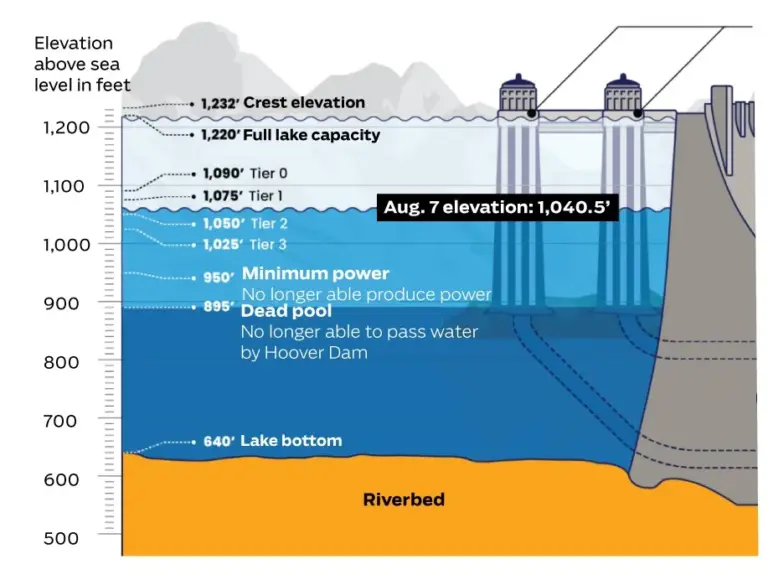
As a consequence, Lake Mead, the largest water reservoir in the U.S., has witnessed a slow but steady decline in water levels.
Lake Mead’s pool elevation hit the new low at 1,040.50 feet on Aug. 7, breaking the previous record of 1,040.58 feet set in July 2022, according to data published by the U.S. Bureau of Reclamation.
City founded on rock
A new town called Boulder City in Nevada was planned not far from the dam. The average amount of workers on the project was 3,500 people and the peak of construction had 5,200. Workers and their families flocked to the area during the Great Depression. The Six Companies Inc. constructed the housing for the workers. Initially the structures were canvas, and the development became known as “Ragtown.” Eventually the city had a department store, post office, theater, hospital, police and fire departments. There was little crime, and the biggest offense in the town was bootlegging.
Rent for a one-room cottage was $15 a month.
The lowest wage for a worker was 50 cents an hour, and the highest was $1.25 an hour. The lowest wage earner made about $1,825 a year, calculated for 2026 that’s about $44,884. Gambling was not permitted in the city, and is still outlawed.
Two-hundred and twelve men died due to accidents or illness related to the dam’s construction.
Namesake
The name “Hoover Dam” was not officially recognized until 1947, when Congress designated the dam in honor of the 31st U.S. President Herbert Hoover. Hoover’s name was not popular during the Depression but he played a key role in seeing the project constructed.
Sources: Bureau of Reclamation Records; National Archives and Records Administration; Library of Congress
Read more LA judge partly grants bid to block suspicion-free immigration stops