
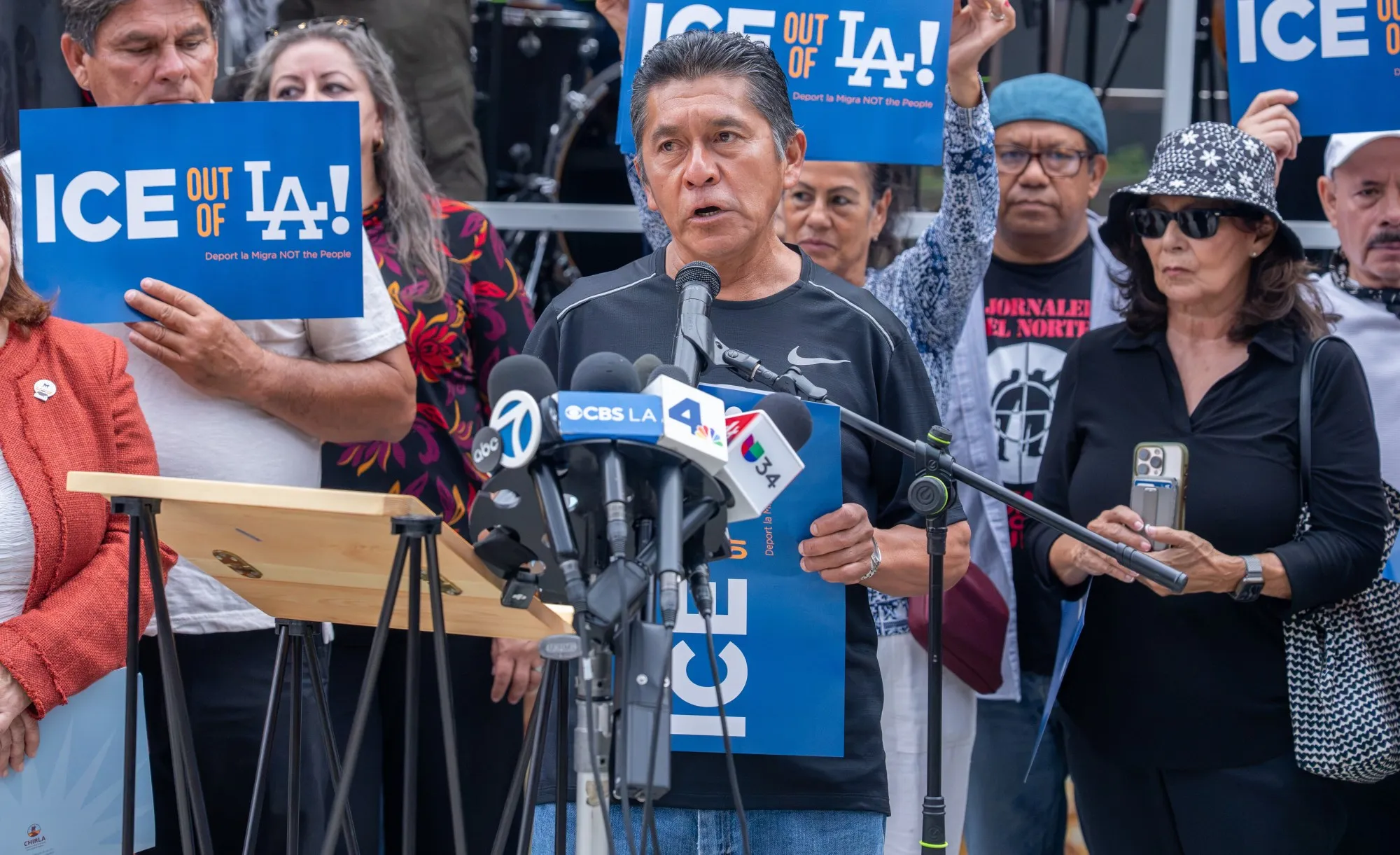
A federal judge on Friday partially granted a restriction on alleged race-based suspicion-free stops of suspected illegal immigrants by federal agents across the district, the latest turn in a lawsuit that arose from a 2025 Pasadena incident.
Read more Newport Beach cancels court-ordered special election for resident measures
Federal agents have allegedly been carrying out an ongoing campaign of warrantless and discriminatory immigration enforcement stops in the region since the summer of 2025, according to the lawsuit filed by the ACLU of Southern California.
The request for a preliminary injunction stemmed from a case in which residents, Latino workers and immigration advocacy groups sued the U.S. Department of Homeland Security, alleging unconstitutional detention practices by agents using racial profiling and suspicion-free stops.
This ruling emerges from a Pasadena incident. The federal case of Vasquez Perdomo vs. Mullin was filed in July 2025 by the ACLU of Southern California, NDLON, and other community groups challenging the aggressive immigration enforcement raids and detention practices across the Los Angeles area as a violation of the Fourth Amendment.
On June 18, 2025, three men — Pedro Vasquez Perdomo, Isaac Villegas Molina and Carlos Osorto — were waiting for the bus across from a Winchell’s Donuts store on Orange Grove Boulevard when they were surrounded by federal immigration agents in unmarked cars and detained. It was about 6 a.m. and they were on their way to Altadena to help rebuilding efforts there.
The ACLU, the Los Angeles Worker Center Network, United Farm Workers (UFW), and Coalition for Humane Immigrant Rights (CHIRLA) filed the lawsuit on behalf of the three Pasadena men, as well as two others: Jorge Hernandez Viramontes of Baldwin Park, who was questioned and detained from his job at an Orange County car wash, and Jason Brian Gavidia of East L.A., who was stopped and questioned from a tow yard in L.A. County.
A federal district court initially issued a temporary restraining order limiting certain enforcement actions. At issue was whether the government’s roving immigration patrols involved racial profiling and were based on perceived ethnicity and without probable cause.
In August 2025, the Supreme Court granted the government’s request to stay that order while litigation proceeds, allowing the challenged practices to continue, but Wilfong said it did not offer any explanation with the action.
According to the ACLU of Southern California, which is representing the plaintiffs in the case, the Trump administration is targeting “people who appear Latino and low-income or working-class.”
On Friday, U.S. District Judge Maame Frimpong issued an order “granting in part stop/arrest plaintiffs’ motion” for a preliminary injunction, but the entirety of the order was sealed from public view.
The judge also granted the plaintiffs’ motion to certify a class, but that order was also sealed.
Read more Trump, seeking to help Maine Sen. Susan Collins, exempts some Canadian imports from his 50% tariffs
In a video discussed in the plaintiffs’ motion for a block on the alleged stops, a DHS agent is captured saying to another: “Yeah, just plug us in wherever you see some tonks,” while other agents guessed whether people were “wet” simply based on appearance.
The complaint says “tonks” is a derogatory and violent term understood to refer to the sound of a flashlight striking a migrant’s head. “Wet” is short for “wetback” and is a racist slur historically directed at Mexican and other Latino immigrants crossing the Rio Grande.
In response to the suit, the DHS has frequently insisted federal agents in the field are operating within the law to protect American citizens.
“Our agents are focused on protecting the American people — not entertaining performative outrage,” according to a statement from DHS. “Where is the media’s outrage for Angel families who lost a loved one to illegal alien crime?”
“Angel families” refers to the relatives of those killed by undocumented individuals present in the United States.
Frimpong heard arguments in September in Los Angeles federal court.
The July motion for restrictions on immigration stops includes body camera footage and depositions of federal agents as part of evidence ordered by Frimpong after the U.S. Supreme Court stayed an earlier temporary restraining order last year which allowed the challenged practices to continue unabated.
Plaintiffs argue the Constitution prohibits law enforcement from using race as a substitute for individualized suspicion. The motion alleges the stops violate both the Fourth Amendment and the Fifth Amendment’s guarantee of equal protection.
“Our communities have been denouncing foul play from day one,” Angelica Salas, executive director of the Coalition for Humane Immigrant Rights, a plaintiff in the case, said previously in a statement. “The evidence doesn’t lie: These arrests were never about safety, they were about skin color. We repudiate this racial profiling in the strongest terms — our communities deserve better.”
“A year ago, farm workers across California were terrorized by brutal and unconstitutional raids based on racial and class profiling,” said Teresa Romero, president of the United Farm Workers, also a plaintiff. “Today, the fear left behind by those raids continues. Farm workers go to work afraid they may not come home, even as they put food on all of our tables. America owes the workers who feed it much better. The workers who feed this country deserve so much better.”
Read more OC prosecutors to begin expunging profiles from controversial DNA database
City News Service and Staff Writer Anissa Rivera contributed to this report