
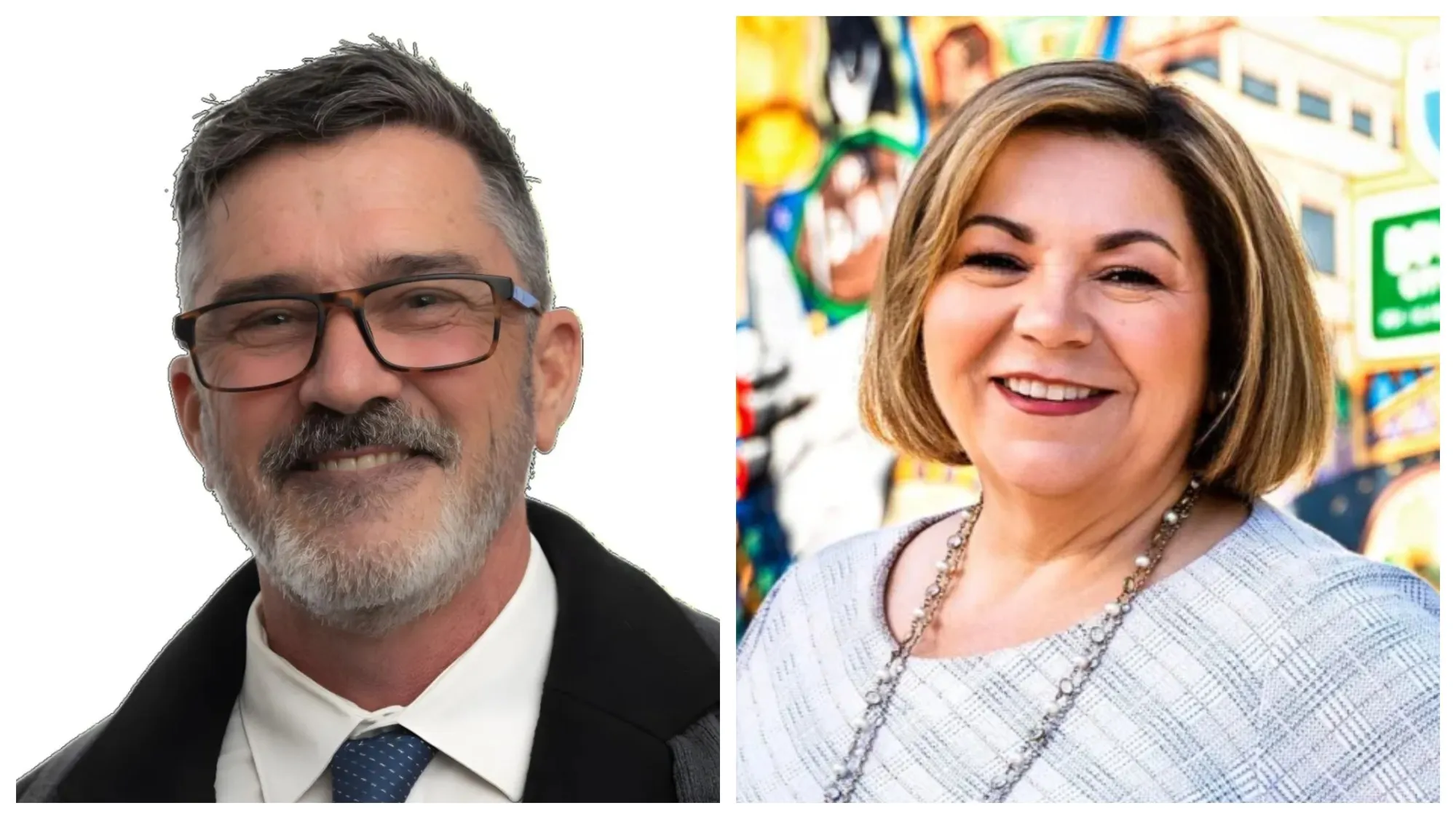
California’s 41st Congressional District is a new one after last year’s mid-cycle redistricting, and it’s a seat plumbing contractor Mitch Clemmons and Rep. Linda Sánchez are vying for in the 2026 midterm elections.
Read more Police confiscate robot that groped 16-year-old girl, probe whether young men were at the controls
Clemmons, a Republican from Santa Monica, and Sánchez, a Democrat who lives in Whittier, offer differing proposals and opinions on how federal lawmakers can make a difference in housing affordability and whether the Trump administration should be allowed to expand offshore drilling in California.
But both candidates also offer some similarities, particularly when it comes to the country engaging in lengthy wars, the importance of local control over new data centers and limits to surveillance technology. They also agree that affordability and cost of living are top of mind for those in the 41st Congressional District.
Housing plays a role in that, and Clemmons said lawmakers could work on reforming not only housing permits but also those related infrastructure, such as power, roads, sewer and water.
“Federal environmental review and overlapping agency rules add years and millions of dollars before a single unit is built,” Clemmons said, adding that those costs are then passed down to renters and first-time homebuyers.
“Congress should set hard deadlines for (National Environmental Policy Act) and related reviews on housing and related infrastructure, require one lead agency instead of a pile of vetoes, and tie HUD and transportation dollars to cities that actually approve housing instead of blocking it,” Clemmons said in response to a questionnaire for the Southern California News Group.
“I would also demand audits of federal housing and homelessness programs so money builds units, not paperwork and fraud,” he said.
Sánchez said increased prices are a result of a lack of homes to meet demand. A fix, she said, is that would allow builders to immediately deduct construction costs rather than spread those deductions out over nearly 30 years.
“Southern California lacks affordable, rental housing, particularly multifamily apartment buildings,” Sánchez said. “Unfortunately, there are high upfront construction costs associated with these buildings.”
Sánchez, 57, has served in Congress since 2003. An Orange County native, Sánchez has worked as a labor attorney and sits on the powerful Ways and Means Committee, the chief tax-writing group in Congress. There, she also serves on subcommittees related to trade and healthcare.
When it comes to healthcare, Sánchez said she supports restoring tax credits that helped reduce the cost of health insurance for those enrolled in the Affordable Care Act that expired at the beginning of this year when lawmakers could not reach a deal to extend them. She would also like to ensure married couples don’t see their premiums raised when one spouse ages into Medicare while the other remains on an ACA plan — that’s a loophole that needs to be closed, she said.
“I also care deeply about affordable, quality long-term care for older adults, so they can age with dignity, which is why I’ve introduced bills expanding Medicare coverage for adult day care and reforming the hospice benefit to improve care and prevent fraud,” Sánchez said.
Clemmons, 54, said he wants to ensure Medicare is not cut for seniors, who have already paid into the program, he noted. Medicaid, though, should see some changes, he said.
“I would protect Medicare for seniors and disabled Americans, and I would tighten Medicaid so it serves the poor, the disabled, and families in real need instead of becoming an open-ended slush fund,” said Clemmons. “Able-bodied adults who can work should be expected to work or train as a condition of long-term benefits. That is fair to taxpayers and to patients who cannot wait.”
“Fund what works: primary care, chronic-disease management, and rural and community clinics that keep people out of the emergency room,” he added. “Cut what does not: duplicate programs, sloppy eligibility, and drug-pricing games. Measure success by lower out-of-pocket drug costs, fewer improper payments, and seniors who can see a doctor without going broke.”
Clemmons is a small business owner, his campaign website said. He is running because he “believes Congress needs more people who have built businesses, served customers, and fixed real-world problems,” according to his campaign website.
When it comes to surveillance technology, like license plate readers made by Flock Safety that have become increasingly controversial, both candidates expressed concern.
“Public safety is a top priority, but it can’t come at the expense of our personal liberties. And right now, there are simply not enough safeguards to prevent abuse,” said Sánchez.
“Police should have tools that catch killers, car thieves, and child predators. They should not have a permanent file on every family driving to church or work,” said Clemmons.
Clemmons said he supports Congress setting certain limits on when license plate readers can be used to crack down on serious crimes, rather than outright banning the technology.
“I would require a warrant or a specific, time-limited investigative purpose before historical plate data can be searched. Cap how long data can be kept unless it is tied to an active case. Ban selling or sharing the data with private vendors, advertisers, or agencies that have no criminal-justice role. Require public reporting: who accessed the system, why, and what cases it actually closed. Protect churches, clinics, and political gatherings from being mapped as a matter of course,” Clemmons said.
Sánchez said she was particularly worried about how the Trump administration is using the technology to carry out its massive immigration crackdown. While Flock has said it does not partner with U.S. Immigration and Customs Enforcement directly, Sánchez pointed to reports of local police departments sharing their data with federal authorities.
“These reports prove that Flock is unable to prevent abuses of its data, and we need additional privacy safeguards now,” said Sánchez.
California’s 41st Congressional District, which changed after voters passed the redistricting measure last year, snakes around southern Los Angeles County, and dips a bit into Orange County. The district is centered on Downey and picks up Bell Gardens, Brea, La Habra, La Mirada, Lakewood, Santa Fe Springs and Whittier.
Democrats account for 45.82% (217,162 people) of registered voters in this district, according to the latest statistics from the California secretary of state, while Republicans make up 26.08% (123,621) and no party preference accounts for 21.29% (100,907).
Hear more from these candidates on various issues, in their own words, in our voter guide.
Every registered voter in California has already been mailed a ballot, and voting is underway. Election Day is Nov. 3.
Read more US hits Bank of America with $1.2 billion fine, saying it violated money laundering, sanctions laws