
SANTA CLARA, Calif. — Anna, who asked to be identified only by her middle name because she fears her mother would disown her if she learned the truth, still hasn’t told her mom that she sparked an investigation into her driving last year.
Read more Olivia Rodrigo announces Daisy Chain Fields festival at Irvine’s Great Park
“She still brings it up,” Anna said. “She’s just pissed.”
Anna’s mother, then 85, was living with chronic pain and memory problems that were making it harder to drive safely. She could barely turn her neck, and a series of minor crashes — including twice backing into the concrete barriers protecting gas pumps — convinced Anna that something had to change.
Many families face these difficult conversations about when it is time for a loved one to stop driving and how to keep them safe if they refuse to give up the keys. Drivers over 65 hold nearly 19% of all California driver’s licenses. And as the population ages, that number is expected to grow.
Over the past decade, the number of motor-vehicle deaths involving drivers aged 65 and older has increased by 33%, according to the National Safety Council. While older drivers are involved in fewer crashes than younger and middle-aged drivers, they are more likely to be seriously injured or killed when a crash occurs.
One option family members like Anna have taken is to submit a request for driver re-examination through the DMV. The confidential form allows relatives, physicians, law enforcement officers and others to report concerns about a driver’s physical or cognitive ability to operate a vehicle safely. Age alone is not enough to spark a review.
The DMV reviews the information and may require the driver to undergo a phone interview, provide medical documentation or appear for a re-examination hearing. If the concerns are grave enough, drivers may have as little as five days to respond to a DMV letter requesting re-examination. The driver is not told who requested the review.
After examining the file, the DMV may choose to take no action, allowing the driver to keep their license without further review if their record or complaint do not suggest a problem. However, drivers who are flagged as potentially dangerous may be scheduled for re-examination, have limits — such as daytime-only driving — added to their record or lose their license.
A DMV spokesperson declined to be interviewed for this story and wouldn’t say how often these requests for re-examination are made and how often licenses are revoked.
When Anna’s mother received a call from the DMV instructing her to come in for a re-examination, she was furious.
“She knew deep down she wouldn’t pass,” Anna said.
Her mother ultimately decided not to go in for the re-examination, and Anna took away the keys. Today, Anna and her sister drive her wherever she needs to go. But losing the ability to drive has taken a toll. Living alone, she can no longer leave the house as freely as she once did, and the feeling of isolation has begun to build.
“We’ve told her, ‘your independence looks different now,’” she said. “Safety is first.”
UCSF neurology professor Katherine Possin said that for many people, being able to drive represents confidence, self-sufficiency and control. For families considering requesting re-examination or a conversation with an older loved one about driving, she stresses the importance of helping that person remain connected to a community.
“The transition can be really difficult,” Possin said. “We wanna focus on how this person can remain mobile and independent.”
Read more Top committed Orange County football recruits from the Class of 2027
Not all families need to turn to the authorities to get a driver off the road. Caryn Dombroski, 75, said her late husband, Michael Clancy, agreed to stop driving after a frightening trip home from Lake Tahoe. As they navigated a blizzard, Clancy struggled to keep the car on the road.
“We had to pull over. I was terrified,” Dombroski said. “He fought me for a bit, but eventually he agreed it was time to stop driving.”
Clancy had been experiencing driving difficulties before the Tahoe trip. About six months earlier, California Highway Patrol officers stopped the couple after noticing he was unable to stay in his lane. The incident was the first time the couple seriously discussed whether it was time for him to stop driving.
Clancy was 74 when he died. But age alone is not what families should look for when evaluating a loved one’s driving, said Julie Thai, a geriatric specialist and assistant professor at Stanford.
Instead, families should pay attention to patterns of cognitive or physical decline. Getting lost on familiar roads, responding incorrectly to traffic lights and an increase in minor accidents can all be warning signs that a person’s ability to drive safely is changing. This can include new dents on the car, seeming confused at intersections, tickets or refusing to drive at night.
Clancy had Parkinson’s disease, a progressive neurological disorder that can affect reaction time, movement and cognition.
“Driving is a very complex task,” Thai said. “It requires you to pay attention and react in a timely manner.”
For older adults whose cognitive decline is less severe, modified driving may still be an option, Thai said. Before giving up driving entirely, she recommends discussing concerns with a healthcare provider, who can help determine whether it is safe to continue driving under certain conditions, such as limiting trips to short distances and avoiding freeways.
Thai said occupational therapy driving assessments are also an option. Some specialists take patients on the road to evaluate reaction time, decision-making and their ability to respond to traffic signs and other driving situations. Concerned family members can speak to their loved one’s doctor.
Crystal Calhoun, 69, has found her way around without getting behind the wheel or relying on family.
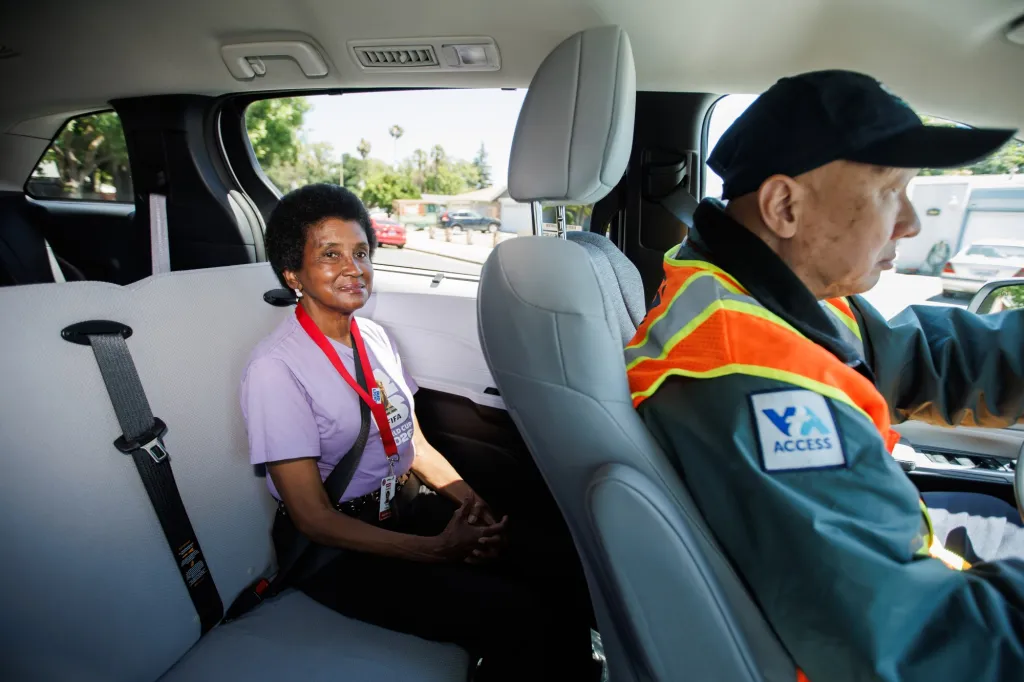
She’s relied on VTA Access, Santa Clara County’s paratransit service, since 2017, when she broke her leg and could no longer drive. Her adult children have children of their own; they weren’t available to help.
“I was down because I didn’t want to be dependent on my family,” Calhoun said.
After nearly a decade using the service, Calhoun says life doesn’t have to stop just because she can no longer drive. Each week, a VTA Access vehicle picks her up at home and takes her to work, medical appointments, errands and other activities, helping her maintain the independence she once feared losing. It costs between $4 and $16 to use the service.
Read more 2 students in custody after shooting at high school in Philippines kills 3
“You can get out. You can go to festivals,” she said. “I’m feeling really good.”