
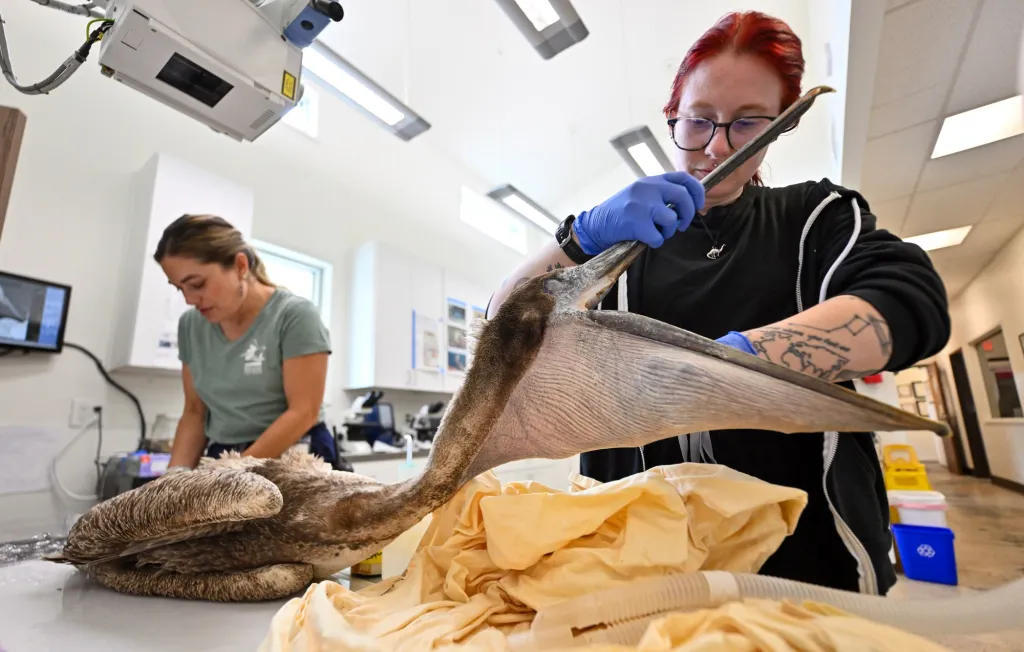
Between disease, pesticide contamination and starvation, seabirds are fighting multiple battles along the California coastline this year.
Read more 988’s LGBTQ+ hotline to relaunch this year. But the group that helped start it might be excluded
Since March, beachgoers have discovered dozens of sick or dead seabirds along the coastal stretch between Santa Barbara and San Diego. Among them have been “tremendous numbers” of dead Brandt’s cormorants, said Rebecca Duerr, the veterinarian and research director for the International Bird Rescue, which operates wildlife rescues in San Pedro and San Francisco.
The bird rescue’s centers have received more than 320 starving seabirds since March.
Similarly, at the Wetlands and Wildlife Care Center in Huntington Beach, intakes of several species of birds spiked the same month. And then, from March to May, the center took in more than 100 brown pelicans, with six dead on arrival, and 66 Brandt’s cormorants, including 12 that arrived dead. Also treated were dozens of western grebes, common and red-throated loons, common murres and gulls.
Brandt’s cormorants and common murres are dying in droves, with increased mortality starting as early as last summer and peaking in winter and spring, according to Krysta Rogers, a senior environmental scientist with the California Department of Fish and Wildlife. Based on mortality reports, more than 400 of both species were estimated to have died in March alone, according to Fish and Wildlife data.
Since April, the agency has seen more reports of dead brown pelicans, loons and western grebes, but still fewer reports than the Brandt’s cormorants and the common murres.
Warm ocean temperatures
Unlike the mass strandings of previous years, an algal bloom is not to blame for the recent deaths. Instead, Duerr called it a mass starvation event tied to “whoppingly hot ocean temperatures.”
In March, the National Oceanic and Atmospheric Administration announced that the West Coast was experiencing a “massive marine heatwave,” marking “only the third time on record that such a large section of the coastal ocean has remained so warm for so long” without an El Niño weather pattern. Things may get worse, according to NOAA — the developing El Niño, which is expected to intensify this fall, could affect marine animals.
In terms of surface area and temperatures, the current heatwave has rivaled “The Blob,” a previous unprecedented heatwave that raised ocean temperatures up to 7 degrees from 2013 to 2016. One of the strongest El Niños on record occurred around the same time in 2015-2016, creating “a worst-case scenario that drove changes around the world,” according to NOAA.
The recent heatwave has raised temperatures 3 to 4 degrees Fahrenheit, and, in September, the Northeast Pacific reached a record-breaking 69 degrees Fahrenheit, which is about a half-degree warmer than it has ever been. In October and November, the heatwave weakened and receded, but it has since strengthened.
Fish seek cooler waters
Temperature increases can impact animal behavior. Seeking cooler temperatures, fish such as sardines, anchovies and herring swim deeper, where seabirds can’t reach them when they dive for food. In postmortem examinations, the primary cause of deaths has been emaciation, Rogers said. In 2015 and 2016, the Blob led to the die-off of about 4 million common murres, the largest single-species wildlife die-off in documented modern history.
However, compared to the Blob, recent temperature increases have had “much less ecological impact,” NOAA said — so far, the warmer waters have not run deep and have not come near the coast. Marine heatwaves can trigger deadly algal blooms, but, so far, that hasn’t happened.
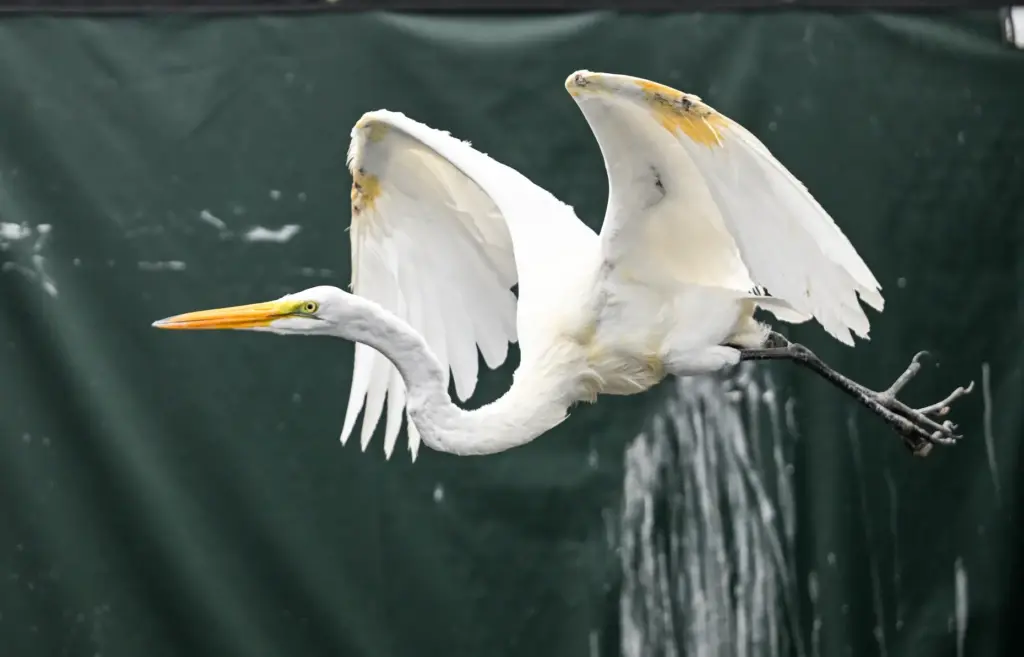 A great egret at the Wetlands and Wildlife Care Center in Huntington Beach on Wednesday, June 17, 2026. An uptick in seabird deaths since March is attributed to the marine heatwave off the California coast, which causes fish to swim too deep for seabirds to scoop up. (Photo by Jeff Gritchen, Orange County Register/SCNG)
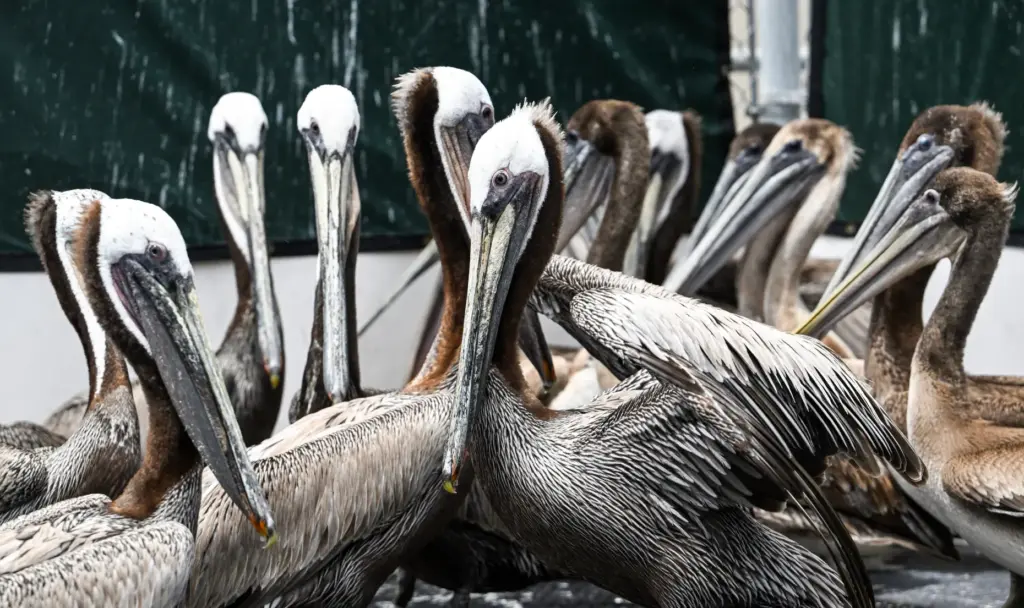 Brown pelicans at the Wetlands and Wildlife Care Center in Huntington Beach on Wednesday, June 17, 2026. An uptick in seabird deaths since March is attributed to the marine heatwave off the California coast, which causes fish to swim too deep for seabirds to scoop up. (Photo by Jeff Gritchen, Orange County Register/SCNG)
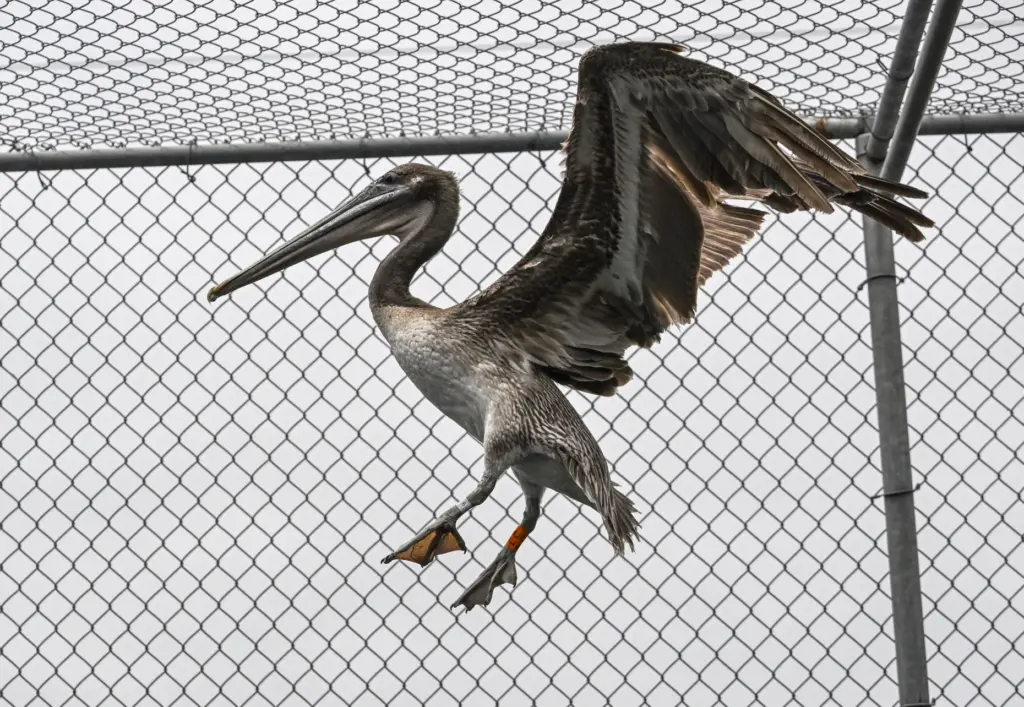 Brown pelican at the Wetlands and Wildlife Care Center in Huntington Beach on Wednesday, June 17, 2026. An uptick in seabird deaths since March is attributed to the marine heatwave off the California coast, which causes fish to swim too deep for seabirds to scoop up. (Photo by Jeff Gritchen, Orange County Register/SCNG)
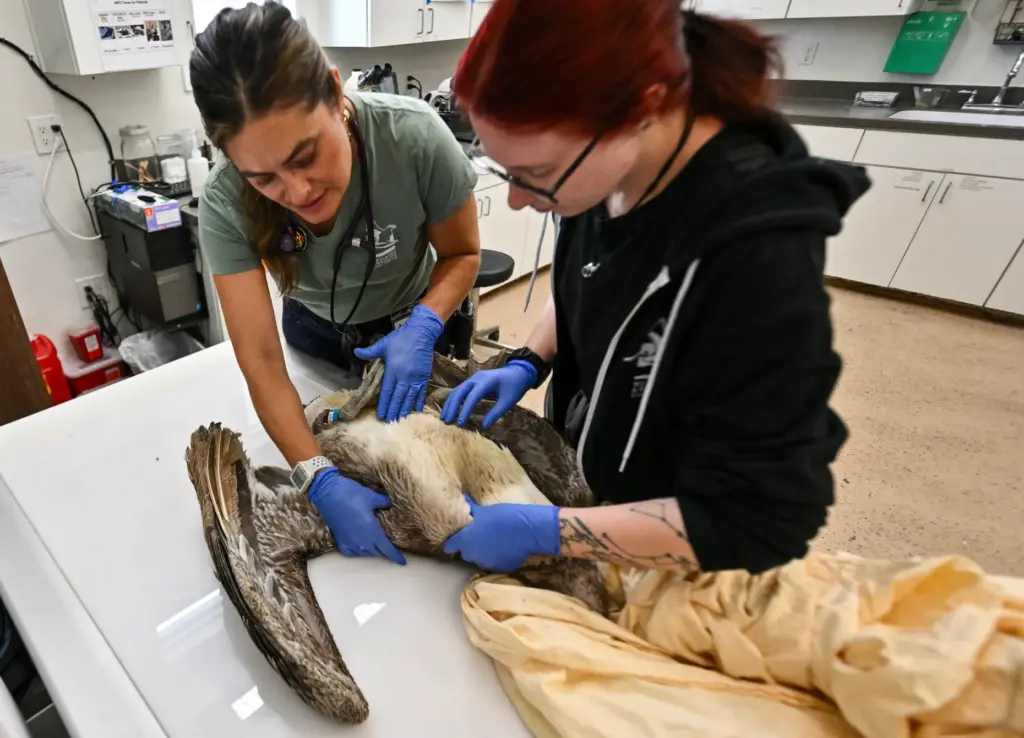 Teal Helms, the interim executive director of the Wetlands and Wildlife Care Center, left, and Medical Director, Dr. Lizzie Wood, examine a brown pelican who has a wound from a fishing hook in Huntington Beach on Wednesday, June 17, 2026. Wood said that one of the results of the current marine heatwave off the California coast is more birds with hook injuries because they look for food closer to people. (Photo by Jeff Gritchen, Orange County Register/SCNG)
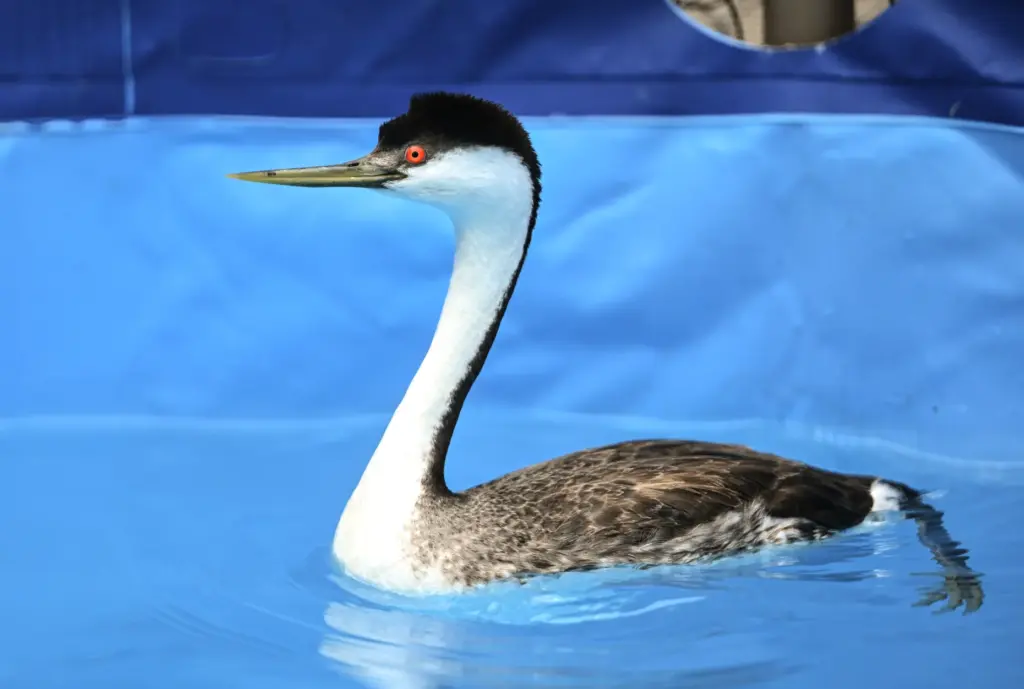 A pied-billed grebe swims in a fresh water pool at the Wetlands and Wildlife Care Center in Huntington Beach on Wednesday, June 17, 2026. An uptick in seabird deaths since March is attributed to the marine heatwave off the California coast, which causes fish to swim too deep for seabirds to scoop up. (Photo by Jeff Gritchen, Orange County Register/SCNG)
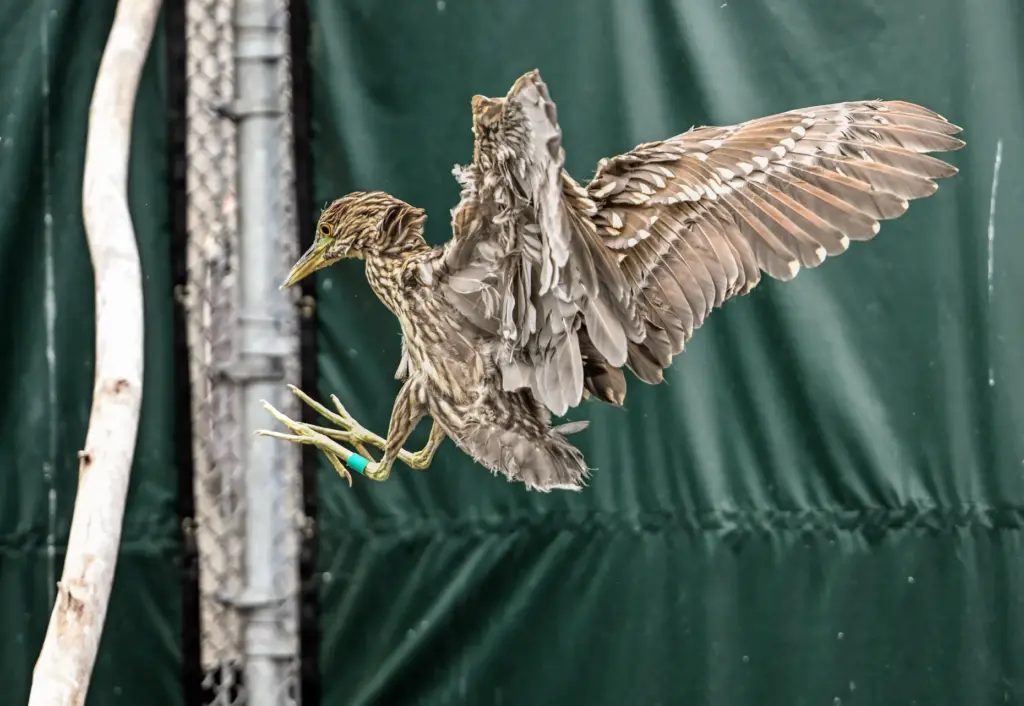 A black-crowned night heron at the Wetlands and Wildlife Care Center in Huntington Beach on Wednesday, June 17, 2026. An uptick in seabird deaths since March is attributed to the marine heatwave off the California coast, which causes fish to swim too deep for seabirds to scoop up. (Photo by Jeff Gritchen, Orange County Register/SCNG)
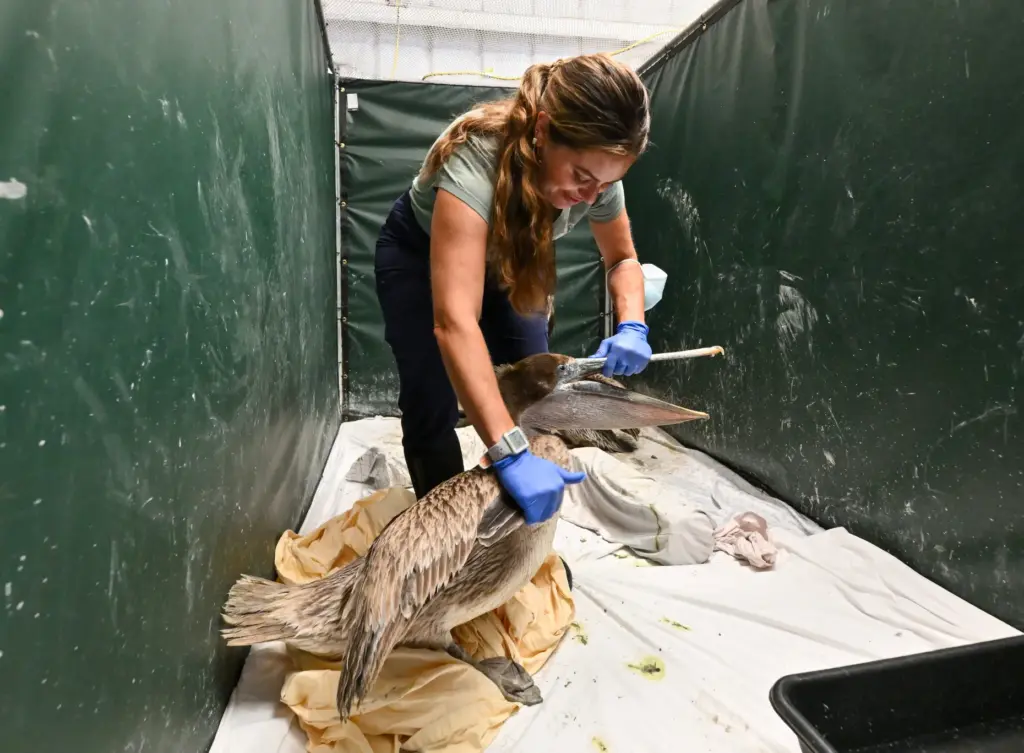 Medical Director, Dr. Lizzie Wood, takes care of a juvenile brown pelican at the Wetlands and Wildlife Care Center in Huntington Beach on Wednesday, June 17, 2026. Wood said that one of the results of the current marine heatwave off the California coast is more birds with hook injuries because they look for food closer to people. (Photo by Jeff Gritchen, Orange County Register/SCNG)
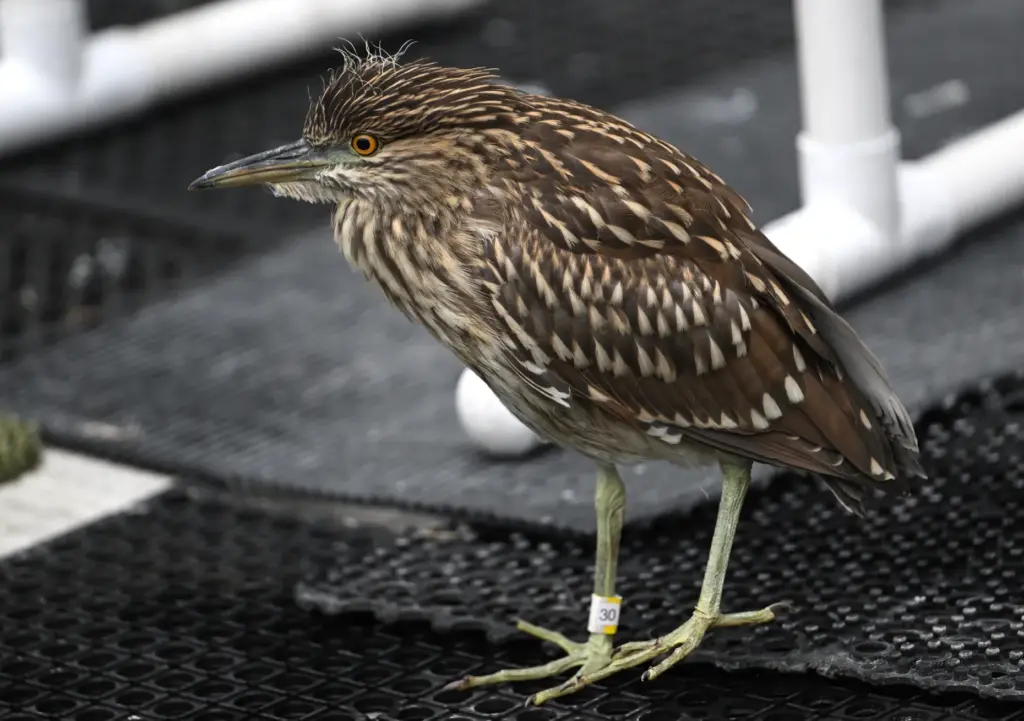 A black-crowned night heron at the Wetlands and Wildlife Care Center in Huntington Beach on Wednesday, June 17, 2026. An uptick in seabird deaths since March is attributed to the marine heatwave off the California coast, which causes fish to swim too deep for seabirds to scoop up. (Photo by Jeff Gritchen, Orange County Register/SCNG)
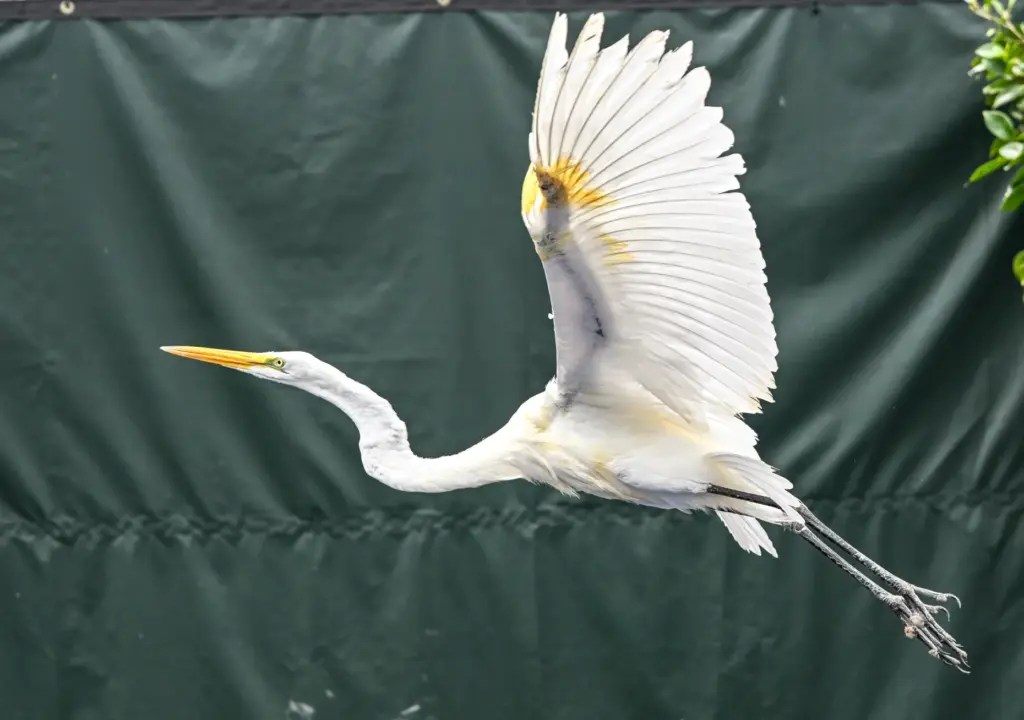 A great egret at the Wetlands and Wildlife Care Center in Huntington Beach on Wednesday, June 17, 2026. An uptick in seabird deaths since March is attributed to the marine heatwave off the California coast, which causes fish to swim too deep for seabirds to scoop up. (Photo by Jeff Gritchen, Orange County Register/SCNG)
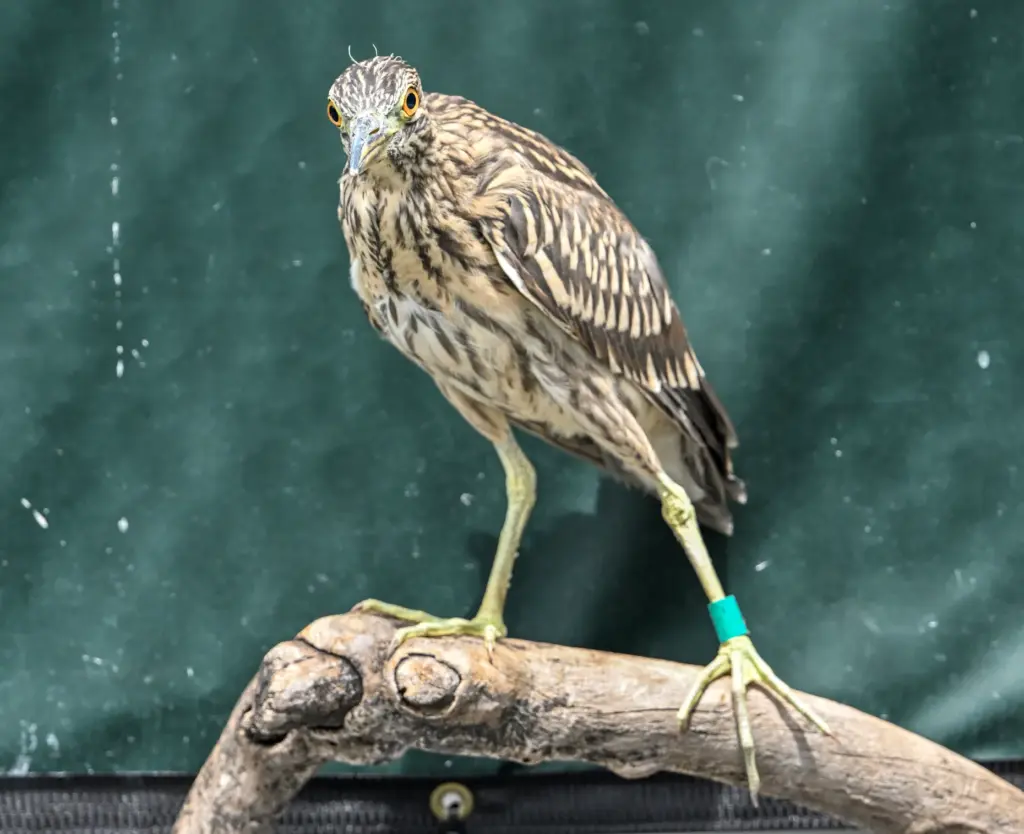 A black-crowned night heron at the Wetlands and Wildlife Care Center in Huntington Beach on Wednesday, June 17, 2026. An uptick in seabird deaths since March is attributed to the marine heatwave off the California coast, which causes fish to swim too deep for seabirds to scoop up. (Photo by Jeff Gritchen, Orange County Register/SCNG)
‘One damn thing after another’
Several other factors are making things even worse for birds, wildlife rehabbers say.
For Brandt’s cormorants and common murres, a productive 2025 breeding season is likely a larger contributor to high juvenile mortality during the fall and winter, Rogers said.
“It is fairly common that some juveniles may have difficulty finding enough food when they become independent of their parents,” Rogers said in an email. “Juveniles may be able to hold on during summer and fall, but can take a real hit during winter storms.”
Read more What’s next for Katie Porter after California governor loss?
Additionally, testing has revealed that pelicans, cormorants and murres all have high levels of DDT, the environmentally persistent insecticide banned by the EPA in the 1970s, according to Duerr. The contaminant loads are “not enough to cause breeding failures,” she said, “but these wild animals are laboring under what humans have wrought to the environment.”
In necropsies of dead birds, the Wetlands and Wildlife Care Center has seen a high incidence of aspergillosis, a disease caused by a fungal infection, said Jaret Davey, the center’s volunteer coordinator. Several Brandt’s cormorants were afflicted with protozoal encephalitis, a neurological disease caused by a parasite that can cause seizures, Duerr noted.
“It’s just one damn thing after another,” she said.
Both rescue centers have ruled out an avian influenza epidemic as the cause of the mass strandings.
California brown pelicans are one of the biggest concerns recently, Duerr said. Between the centers in San Pedro and the Bay Area, they had taken in more than 20 pelicans in two days. “I’m a little concerned that it’s ramping up rather than down,” she said.
Less severe than past die-offs
But, overall, this year’s mass stranding is not as severe as those in years past, Davey said. “There hasn’t necessarily been an abnormal number of birds that are coming into care,” he said. In fact, compared to previous years’ numbers, pelican intakes are down for the rescue facility, he said, whereas numbers of loons, grebes, cormorants and gulls are on the rise.
Unlike 2022, 2024 and 2025, which saw high pelican stranding rates, this event is not tied to an algal bloom, Davey said. Based on plankton samples, scientists can tell there aren’t high levels of the algae that produces domoic acid, which can build up in birds’ systems and
Reduced prey availability makes birds, particularly brown pelicans, behave more erratically in their desperate search for food, Duerr said.
“They get into trouble more,” she said, and rescuers see car strikes and swallowed fishing gear. Starving pelicans have also shown up in surprising places in recent months, including around the 405 Freeway and in the median on Pacific Coast Highway.
There are other indicators that pelicans have been struggling with the marine heatwave, Duerr said. This year’s pelican nesting season “was mostly a bust” on the Channel Islands, she said, with many parents abandoning their chicks at 6 to 8 weeks old, just before they were ready to fledge.
“Usually they do that when there’s nothing to feed them,” she said. Duerr said her team also has received reports from scientists in Oregon that the pelicans who migrate north during the warmer months arrived two months early.
Rehabilitation involves temperature regulation — a pelican’s ideal body temperature ranges from 101 to 108 degrees Fahrenheit, Davey said — and hydration, which is administered orally, via IV, or by subcutaneous injection. The birds start out on a liquid diet, then work their way up to eating fish. Within a week of arrival, the center puts the birds in outside enclosures with landing platforms, where they can build up their wing strength.
Eventually, the birds are released onto the beach. But some birds, such as Brandt’s cormorants, don’t respond well to treatment, Davey said.
There’s not much the public can do other than to keep an eye out for seabirds in trouble, wildlife advocates say, and call if you see birds in crisis.
“Everyone should be a birder,” Davey said. “Noticing trends of local neighborhood wildlife is definitely important.”
Read more Mistrial declared in trial against man accused of igniting the Palisades fire