
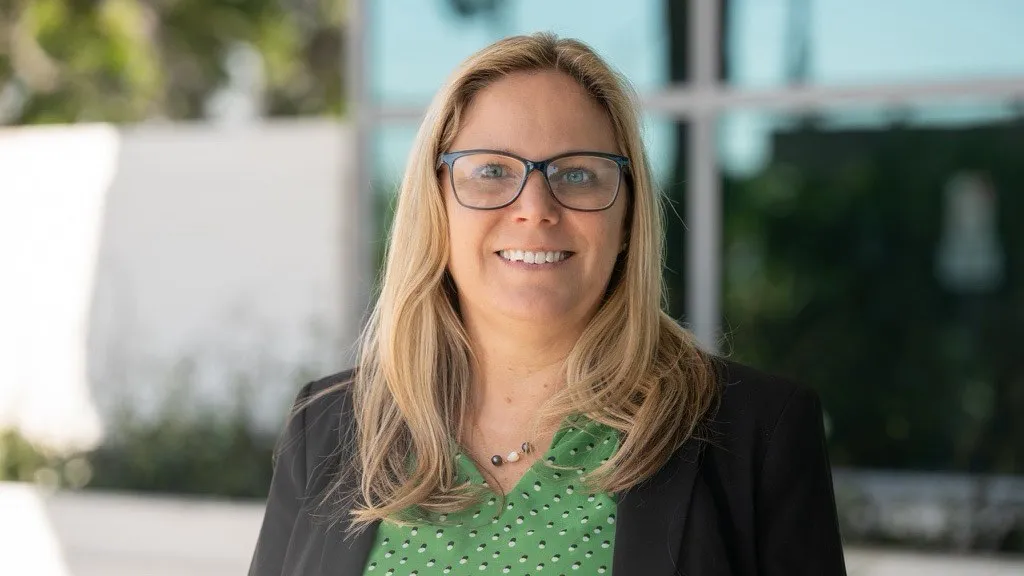
Ahead of the November general election, the Southern California News Group compiled a list of questions to pose to the candidates who wish to represent you. You can find the full questionnaire below.
Name: Carrie Buck
Age: 54
Current job title: Placentia-Yorba Linda Unified School Board President
Incumbent: Yes
Other political positions held: None
City where you reside: Yorba Linda
Campaign website or social media: carriebuck4pylusd.com
What are the top two needs of your school district, and how are you prepared to address them? (Please answer in 200 words or fewer.)
School safety:
— Strengthen emergency preparedness and security protocols across all campuses.
— Expand age-appropriate safety education, including pedestrian, e-bike, and digital safety.
— Strengthen partnerships with families, staff, first responders, and local law enforcement.
College and career readiness:
— Expand dual enrollment and opportunities to earn college credit.
— Strengthen CTE and ROP programs beginning with age-appropriate career exploration in middle school.
— Increase access to internships, job-shadowing, mentorships, and work-based learning for high school students.
— Expand access to industry-recognized certifications and career pathways.
— Ensure elementary and middle school students build the academic, technology, and life skills needed to take advantage of these opportunities later.
To you, what is the role of a school board in education? Is it driving policy, being involved in curriculum, something else entirely? (Please answer in 200 words or fewer.)
No. 1: Adopt, evaluate and update policies consistent with the law and the district’s vision and goals.
No. 2: Hire and support the superintendent and set protocol for the hiring of other personnel so that the vision, goals, and policies of the district can be implemented.
No. 3: Adopt a fiscally responsible budget based on the district’s vision and goals and regularly monitor the fiscal health of the district.
No. 4: Ensure that a safe and appropriate educational environment and facilities be provided to all students.
How do you feel artificial intelligence is, or isn’t, safe in the classroom? In what instances should it be expanded in the classroom? What about when it should be limited? (Please answer in 200 words or fewer.)
School districts need to manage artificial intelligence as an instructional, governance, and student-safety issue, not simply as a technology issue. We need to teach AI literacy, including accuracy, bias, privacy, copyright, academic integrity, and responsible use. Creating clear and age-appropriate guidelines, approving tools only after privacy and security reviews, and requiring human oversight for decisions involving grades, discipline,
AI should be limited when it replaces foundational reading, writing, mathematical reasoning, creativity, or meaningful interaction between students and teachers. It should not complete assignments intended to demonstrate independent mastery or make decisions involving grades, discipline, special education, student placement, or employee evaluation.
Students should also have a meaningful role in developing and evaluating district AI practices. Because AI continues to evolve rapidly, policies, tools, and student experiences should be reviewed annually.
How do you believe schools can better teach or engage students in civil discourse? How would you like to see your district tackle this issue? (Please answer in 200 words or fewer.)
Schools can better engage students in civil discourse by intentionally teaching the skills required for respectful disagreement. Students need practice listening to understand, asking thoughtful questions, evaluating credible evidence, recognizing bias, distinguishing facts from opinions, and responding to ideas without attacking people. Classroom discussions should include clear expectations that protect students’ ability to express different viewpoints while maintaining dignity and respect. Teachers need training and balanced instructional materials to facilitate conversations about complex or controversial issues without promoting a particular political position.
Students should have authentic opportunities to practice civil discourse through structured debates, Socratic seminars, student forums, mock elections, service-learning projects, and discussions connected to local issues. Schools can also provide civic engagement opportunities through student advisory councils, inviting students to help develop discussion norms, and opportunities to present recommendations to school administrators and the school board.
Civil discourse is strengthened when students and adults learn that disagreement can lead to understanding, better decisions, and constructive action.
Some school districts around California are recruiting teachers by building subsidized housing. How would you suggest your district could better attract — and retain — educators? (Please answer in 200 words or fewer.)
School districts can attract great teachers by offering competitive compensation, strong benefits, clear career pathways, and an efficient hiring process that identifies qualified candidates early. Partnerships with universities, including Cal State Fullerton for student-teacher programs, internships, residency programs, and classified-to-certificated pathways, can build a reliable local pipeline.
Retaining great teachers requires more than salary. Teachers are more likely to stay when they feel respected, supported, and included in decisions affecting their classrooms. Districts where leadership listens, follows through, provides needed resources, and allows educators to focus on helping students succeed will retain and draw great teachers.
What experiences and priorities do you bring to this role? What have you learned in prior leadership roles that makes you the person for the job? (Please answer in 200 words or fewer.)
My experience makes me the best school board trustee and candidate for PYLUSD reelection because I understand both the responsibilities of governance and the real-life challenges facing students and families. Since 2010, I have helped oversee a $300 million-plus annual budget, evaluated and selected superintendents, supported academic and career programs, strengthened school safety, planned for facilities, and made difficult decisions to protect the district’s long-term stability. Serving four terms as board president and on other boards has taught me how to build consensus, ask thoughtful questions, remain accountable to the public, and keep the school board focused on student achievement.
My professional work with children and families experiencing homelessness gives me an important perspective on the barriers that can affect a student’s success. I understand how housing instability, food insecurity, disabilities, family circumstances, and limited access to resources can follow a child into the classroom. My service with NOCROP and other countywide education, housing, health, and community organizations also helps me build partnerships that expand opportunities for students.
I bring experience, institutional knowledge, fiscal responsibility, and strong community relationships to every decision. Most importantly, I listen to students, parents, teachers, staff, and community members and work to ensure that district decisions are transparent, responsible, and focused on helping every student succeed.
If your campaign had a mascot, what would it be and why? (Please answer in 200 words or fewer.)
A deer, because I’m Carrie BUCK.
Bonus question: What is the best book you’ve read this year? Explain why you found it compelling.
I don’t get to read for fun as much as I would like, so I don’t have a best book for the year.
Read more Lan Quoc Nguyen, Garden Grove Unified School District Area 2 candidate, 2026 election questionnaire