
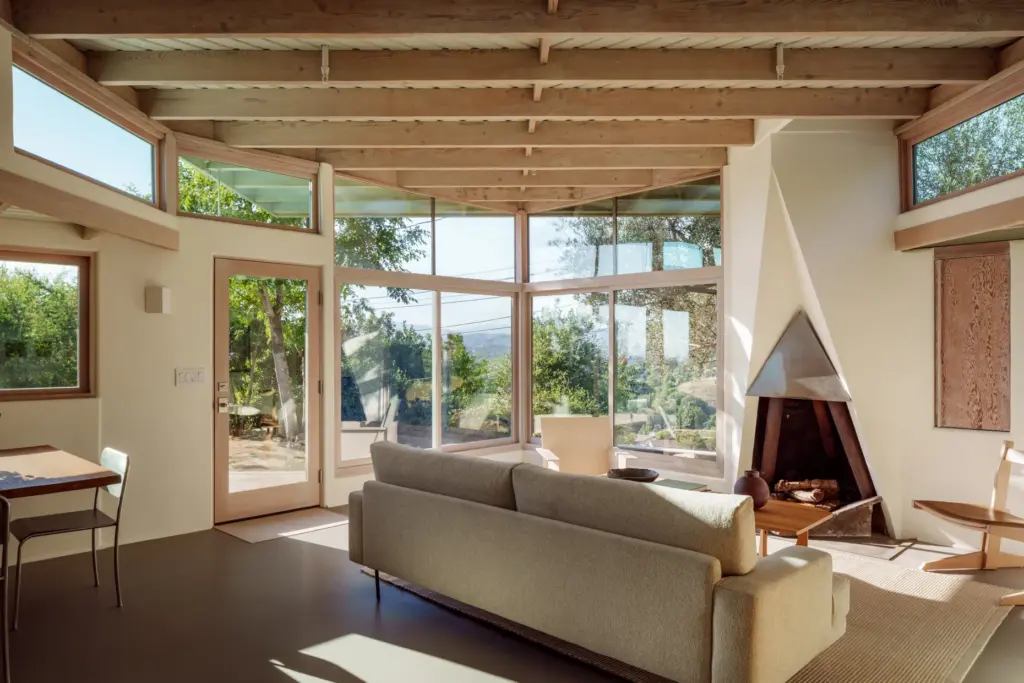
 The stainless-steel fireplace in the living room. (Photo by David Fitzgerald)
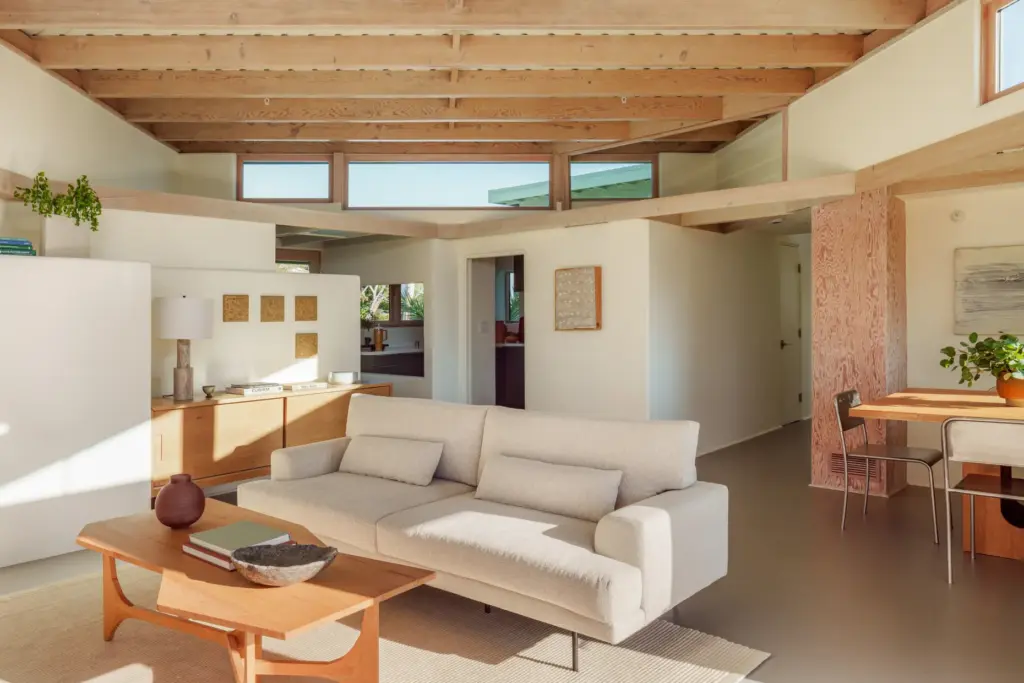 The main living area connects to a bedroom hallway, right, and the kitchen, center. (Photo by David Fitzgerald)
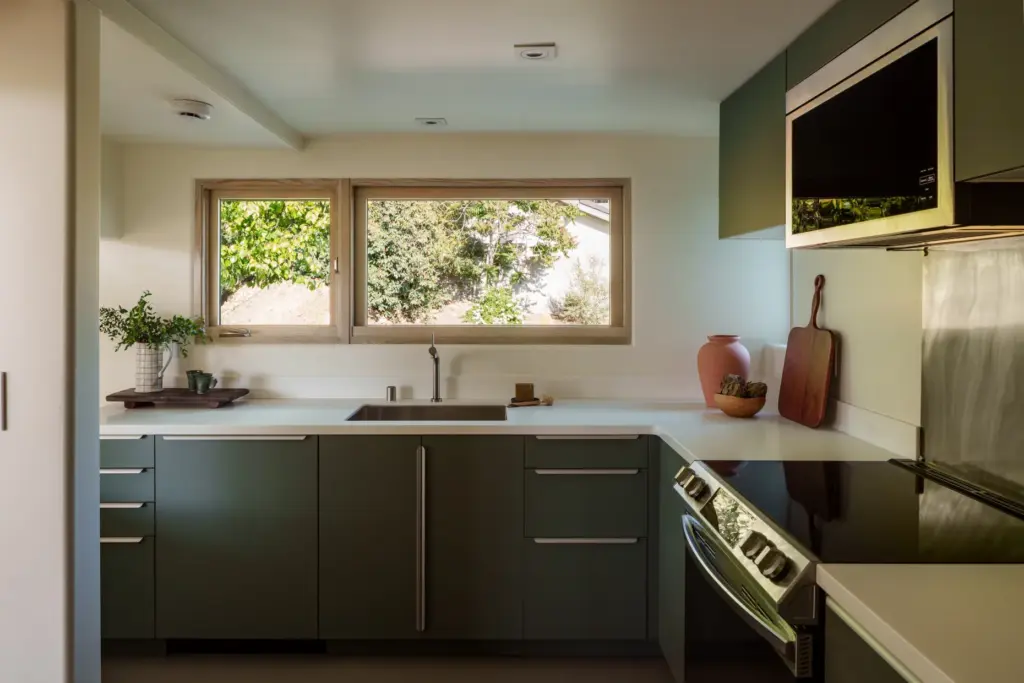 The kitchen. (Photo by David Fitzgerald)
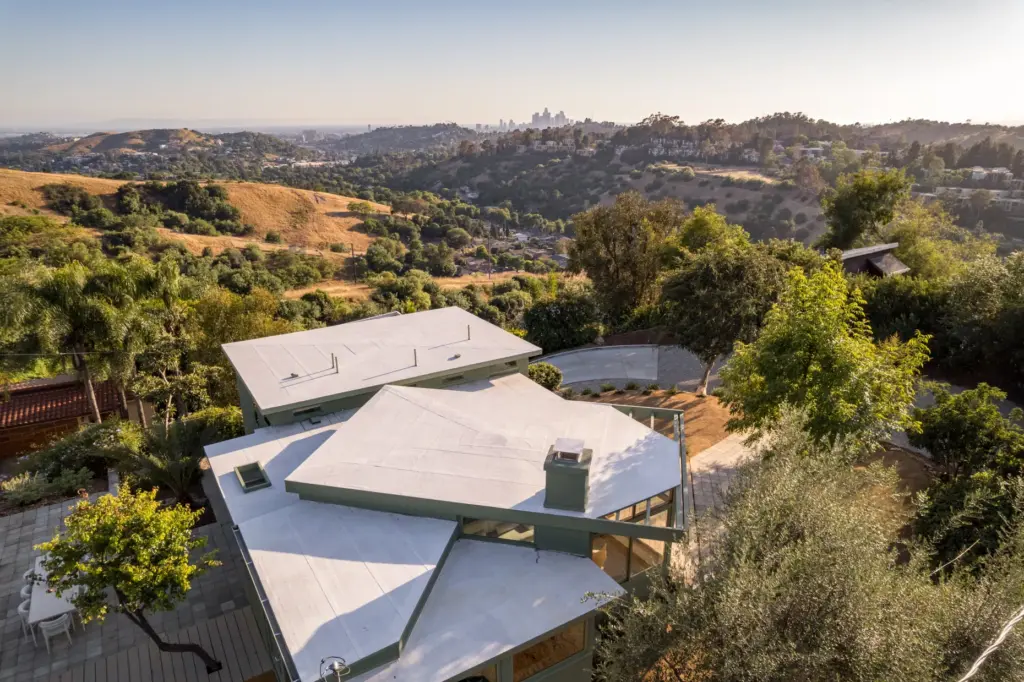 An aerial view shows the multi-tiered geometric rooflline of R.M. Schindler’s Howenstein Residence. (Photo by David Fitzgerald)
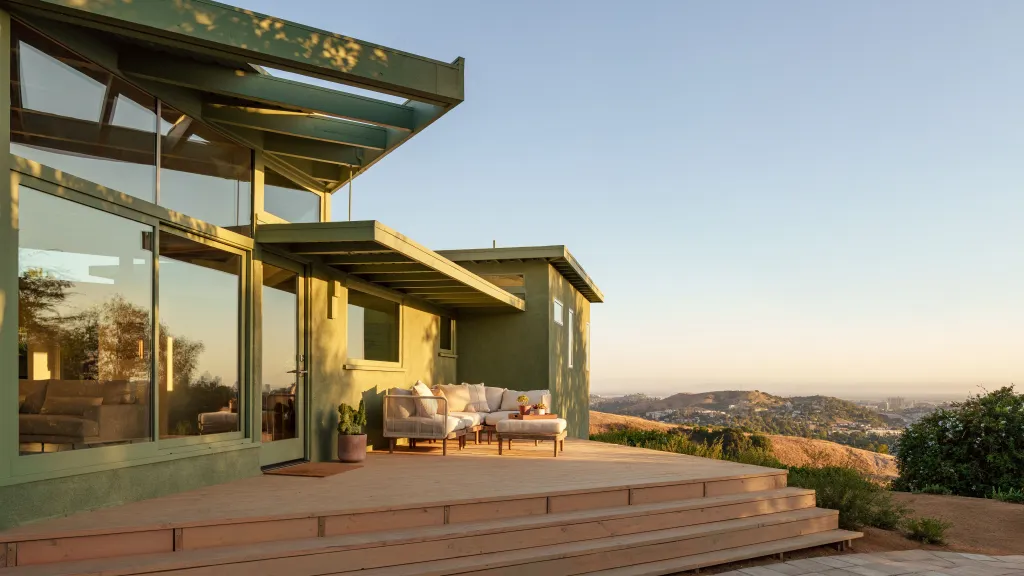
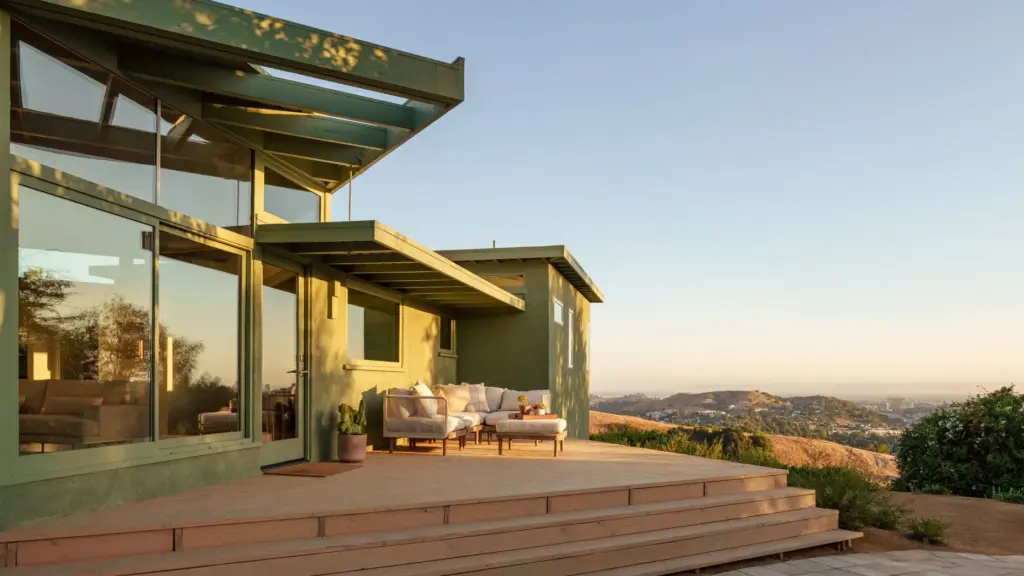 The Howenstein Residence in South Pasadena, remodeled and expanded by modernist architect R.M. Schindler in 1943 and newly restored, is on the market for just under $2 million. (Photo by David Fitzgerald)
A South Pasadena hillside home, remodeled and expanded in 1943 by modernist architect R.M. Schindler, is on the market for $1.995 million following a meticulous restoration.
Read more Trump proposal to eliminate ‘roadless areas’ in forests draws ire among Southern Californians
The residence bears the name of its original builder, Karl Howenstein, an architect who served as managing director of the Otis Art Institute and curator of the Los Angeles Museum of History, Science and Art. Howenstein completed the home nearly 20 years before he commissioned Schindler to reimagine the space to prioritize the experience from the inside out.
Within the Howenstein Residence’s 1,420 square feet are three bedrooms, two bathrooms and continuous floor-to-ceiling glass. The house sits on a nearly half-acre property across four parcels in the Monterey Hills area, offering sweeping views of the San Gabriel Mountains to downtown Los Angeles.
Public records show the property last sold as a “restoration opportunity” for $1.65 million in August 2023.
According to the listing, “Its restoration was undertaken with deep respect for Schindler’s vision and craftsmanship, preserving the inventive spirit of the home and its dramatic flying roofline while thoughtfully adapting the property for modern living.”
Inside, natural light shifts throughout the day thanks to its flying roofline. The flat, overlapping roof panels cantilever past the exterior walls, creating vertical gaps for high clerestory windows to illuminate the interior.
During the recent restoration, the owners stripped away paint to reveal the natural grain of the exposed wood beam ceiling. They uncovered the triangular stainless-steel hood of the angular fireplace, restoring the geometric focal point of the living room, where glass walls extend the living space outside.
Read more L.A. Fleet Week kicks off in San Pedro — with plenty to see and do
Original plywood built-ins and custom lighting designs were also restored.
Upgrades emphasized sustainability and wellness through modernized systems, all-electric designs and eco-conscious building materials. Those choices extend directly into the kitchen, which pairs flat-panel, earth-toned cabinetry with flush countertops and clean stainless-steel fixtures, including an electric, glass-top range.
Alyssa Valentine and Anselm Clinard of Compass hold the listing.
Schindler was a pioneering architect who helped reshape Southern California architecture, especially known for blending indoor and outdoor living. Born in Vienna, he studied structural engineering and architecture before moving to Chicago to work for legendary architect Frank Lloyd Wright in 1918.
In 1920, Wright sent Schindler to Southern California to oversee the construction of the Hollyhock House in the East Hollywood neighborhood of Los Angeles for oil heiress Aline Barnsdall.
Schindler resigned from Wright’s firm a year later to launch his independent practice in Los Angeles, designing upwards of 500 projects of which about 150 were built, including his own Schindler House on Kings Road in West Hollywood in 1922 and now operates as the MAK Center for Art and Architecture.
Schindler continued working until he died in August 1953 of prostate cancer at 65.
Read more Garden Grove Strawberry Festival is ‘still happening,’ pending updates on hazmat ‘crisis’