
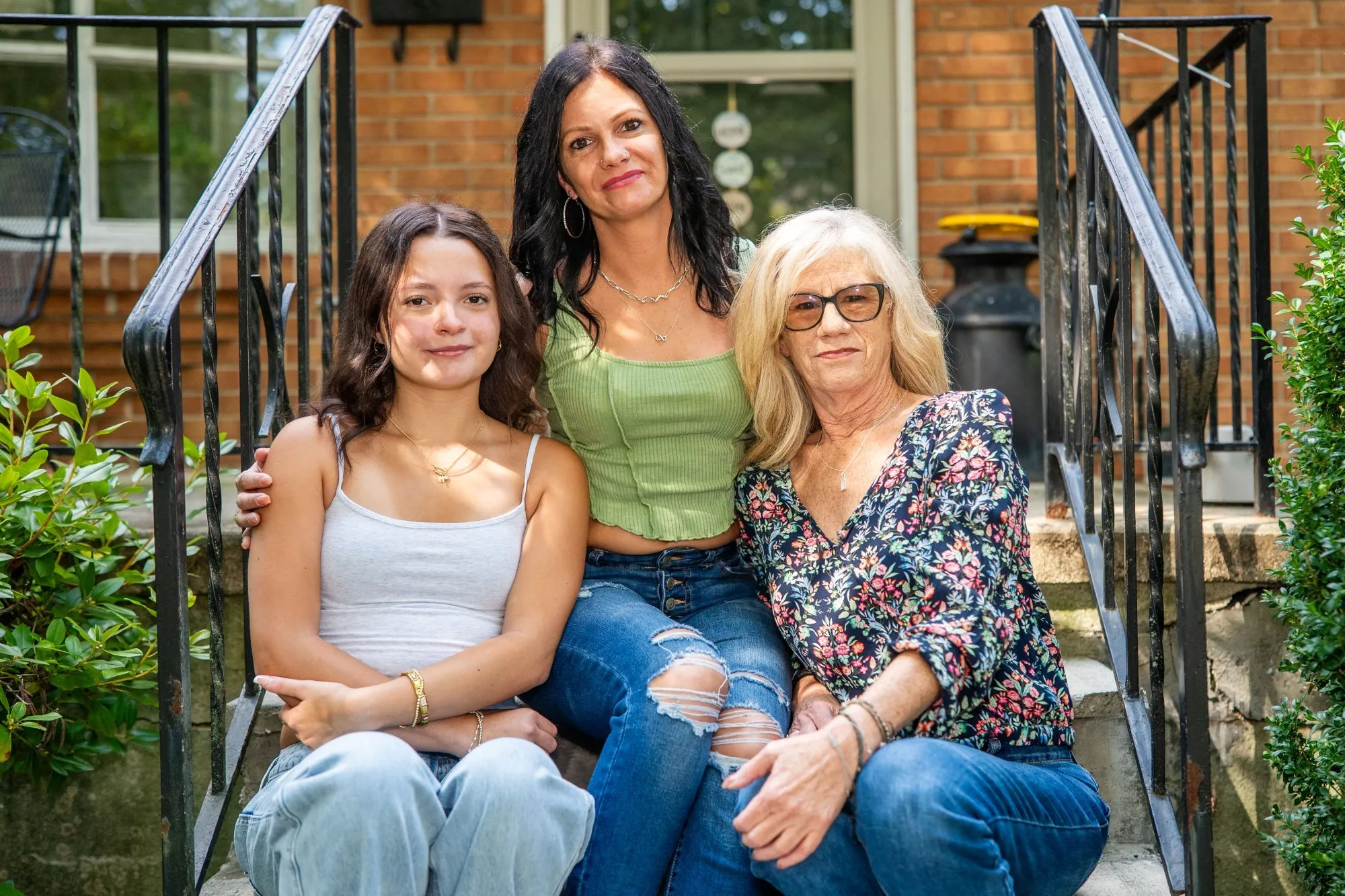
BETHLEHEM, Pa. — Shared pain and a desire to overcome it are among the many things that bring Carissa Kent and her daughter, Angelina, together.
Read more Judge says search warrants used to seize property from former Prince Andrew were unlawful
Their pain is both emotional and physical; the mother and daughter both have endometriosis, a chronic and painful condition where uterine tissue grows outside of the uterus. Angelina may be the third in their family to have the condition, as they as strongly suspect Carissa Kent’s mother, Charlene Timpone, also had it as a girl, although it was never officially diagnosed. They have each dealt with severe persistent pain and abnormal bleeding for much of their lives.
Carissa, 42, and Angelina, 15, are sharing their story to bring attention to a disease that for some women can take years to diagnose — an average of four to 11 years, according to the American Medical Association. An estimated 6 out 10 cases aren’t diagnosed at all, the association said.
What to know about endometriosis
Onset of symptoms is difficult to predict. Some women begin experiencing endometriosis symptoms during their first period, though some people may not experience any until after a pregnancy.
Endometriosis is associated with a higher risk of early death and various poor outcomes for those who live with it. Carissa Kent said that there is an old myth that endometriosis is the “career woman’s disease,” and the cause was delaying pregnancy or choosing not to have children. According to the Endometriosis Association, the exact cause is unknown, but the leading theory is that it may be related to exposure to industrial waste chemicals like dioxins and PCBs, as well as genetic factors and other possible causes.
There is no cure. Treatments include pain medication, hormonal therapy and surgery that involves the removal of the abnormal tissue. Sometimes women stop experiencing symptoms after pregnancy or after tissue is removed; for others like Carissa and her daughter, multiple surgeries didn’t stop the bleeding or pain.
Fertility issues also are common, and Carissa said she was lucky she even got pregnant with her daughter.
“I was literally told I was never going to have any [children],” said Carissa, of Bethlehem. “She is my miracle one and only.”
One family’s story
Carissa said she began experiencing symptoms when she was 13, but didn’t get diagnosed for years. She said unsupportive doctors disregarded her pain and heavy bleeding and accused her of being anorexic or faking her symptoms for attention. It wasn’t until Carissa was around 18 that surgeons performed laparoscopic surgery and discovered a bloody cyst the size of a grapefruit on one of her ovaries. They removed what they could. Then, after multiple procedures over several years, she ended up with very little ovary left.
“I tried and tried to have kids and I couldn’t. I never had a scare, never was pregnant,” she said.
Though she went through medically induced menopause through hormone injections during her 20s, when she got off the hormones, she miraculously got pregnant.
“I needed an emergency C-section. I was scheduled for one because of how I bleed so much and they were nervous. I ended up being an emergency one and I went into shock. They had to put me under anesthesia. I almost died,” Carissa said.
She survived and gave birth to Angelina, who grew into a healthy, caring, hardworking and determined girl.
But when she was 9 years old, what Carissa dreaded for her daughter came to pass: When Angelina had her first period, she began bleeding and experiencing severe chronic pain.
Read more California multifamily permits jump 33% this year
“Doubled over in pain, and the anemia, being nauseous, being dizzy, constantly losing blood,” Carissa said. “It hurts because it’s like I gave this to her, I have it.”
While it didn’t take as long for Angelina to get diagnosed as it did for her mother, she still wasn’t diagnosed until she was 11. Her mother said doctors insisted on ruling out other conditions before checking for endometriosis.
“They were concerned about her having children. She was 9. That was not my concern. We are not here just as women to make children. My daughter was not living a childhood,” Carissa said. “[A doctor] literally said to me, ‘Well, at this point her levels aren’t too bad.’ I said, ‘She’s been bleeding for two years.’ And excuse me, but I looked at him and I said, ‘If you were bleeding … for two years, would you say you had room to bleed?’ It’s just ridiculous that they allowed this.”
They eventually found another doctor, but had to pay $15,000 just to get Angelina on the schedule. The family launched a GoFundMe to help with the expense, but it was still a large burden, Carissa said.
Laparoscopic surgery revealed what Carissa had insisted it was from the beginning — Angelina had stage 3 endometriosis. Surgeons removed damaged tissue and for some time Angelina got to live without much of the pain or unpleasantness of the condition, but that reprieve was temporary. Medications prescribed to help stop the bleeding or deal with other symptoms did not do much and at times came with serious negative side effects.
Angelina said she can barely remember what her life was like before endometriosis
“It’s sharp, like shooting pains,” Angelina said. “It’s like that all the time.”
Angelina is like many other teenage girls; she loves to spend time with her friends when she can, babysit her cousins, play with her dogs and watch horror movies.
But her condition has left her with chronic anemia; she often feels fatigue, nausea and dizziness, and easily runs out of breath. She said she can’t do many of the things other kids her age do. Though she would like to, she can’t play sports and for a while wasn’t able to attend school in person, but has since returned to 10th grade in Liberty High School. She said she often feels depressed when she has to stay home all the time.
Carissa Kent said she went through surgeries every year for a long time, which left her out of or away from work. She recently had a complete hysterectomy, which stopped her bleeding, but she still experiences pain. And there is the potential that it may come back for her; she said lesions could still grow on her lungs, bowels, esophagus or various other parts of her body.
Angelina had a surgery in mid-September that they hoped would help reduce or end her symptoms, but it did not.
Carissa Kent said she just wants to find a way for her daughter to live without the bleeding and pain. She shares hers and her daughter’s story on her Instagram page 3genendowarrior.
“There are women that can have one surgery and they’re fine,” she said. “And I I love that for them and I wish we were those people, but my daughter and I have … a very bad case.”
Read more Rubio visits Portugal, praising a ‘great ally’ and looking to build deeper ties