
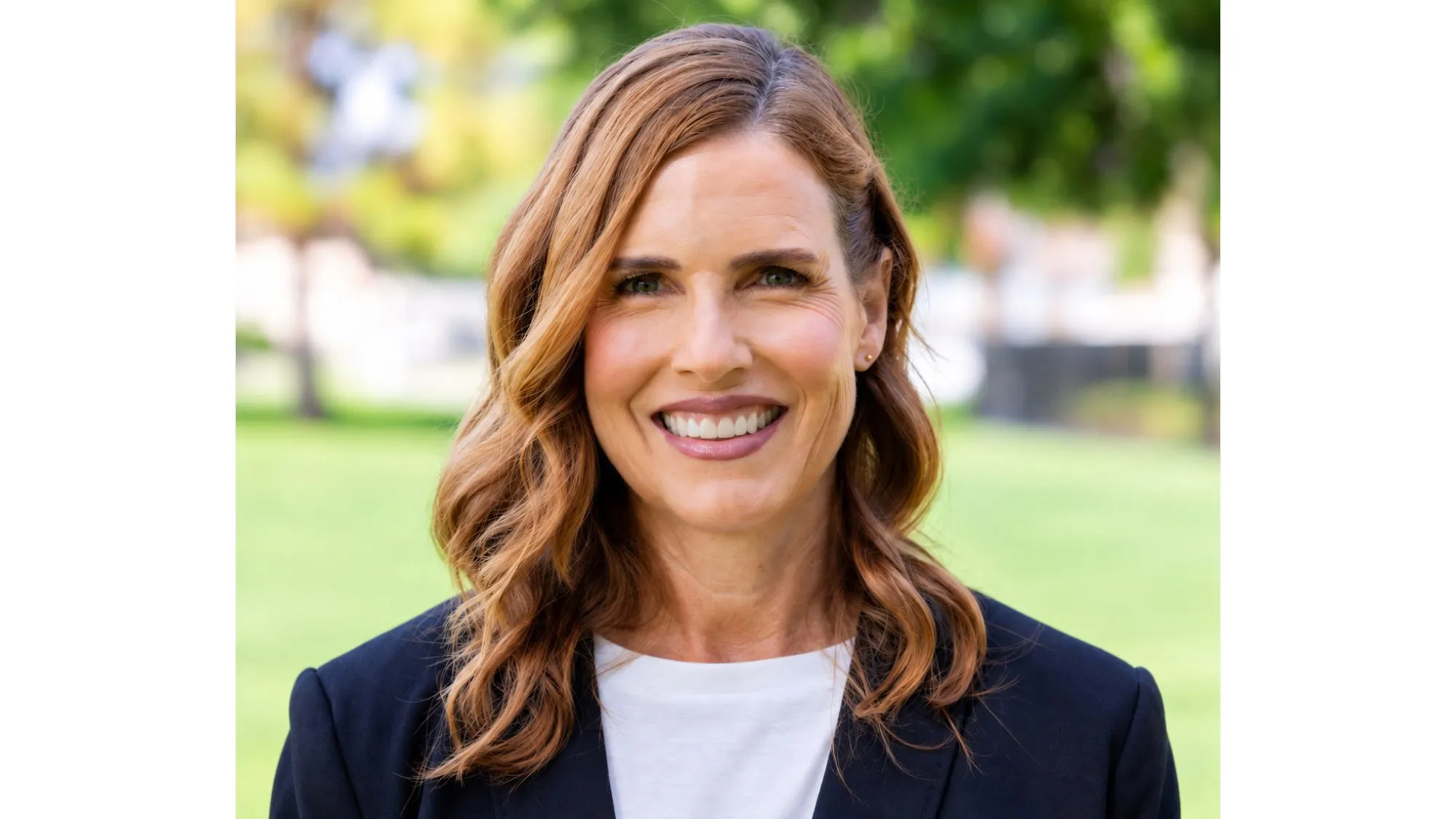
Ahead of the November general election, the Southern California News Group compiled a list of questions to pose to the candidates who wish to represent you. You can find the full questionnaire below.
Read more Ron Scolesdang, Irvine Unified School District Area 2 candidate, 2026 election questionnaire
Name: Katie McEwen
Age: 55
Current job title: Irvine Unified School District Board Member
Incumbent: Yes
Other political positions held: None
City where you reside: Irvine
Campaign website or social media: mcewenforiusd.com
What are the top two needs of your school district, and how are you prepared to address them? (Please answer in 200 words or fewer.)
Our first need is continuing to support the whole child by fostering both academic achievement and students’ social-emotional well-being. These needs are deeply intertwined: Students are better able to learn, take intellectual risks, and reach their potential when they feel safe, supported, connected, and well. I am committed to maintaining IUSD’s high academic standards while strengthening mental health, counseling, special education, and other supports to ensure every student has what they need to succeed and graduate prepared for college, career, and life.
Our second major need is adequate and sustainable funding. IUSD is one of California’s highest-performing school districts, yet remains among the lowest funded per pupil. Our board and district leadership have been strong fiscal stewards, strategically maximizing limited resources to provide exceptional educational opportunities. But California’s funding formula does not adequately reflect the costs of providing the high-quality education our community expects, particularly as we balance competitive compensation for outstanding employees with growing student needs and rising costs.
I will continue advocating for full and fair funding while ensuring every dollar is used responsibly and strategically to fulfill our promise to provide the highest quality education we can envision.
To you, what is the role of a school board in education? Is it driving policy, being involved in curriculum, something else entirely? (Please answer in 200 words or fewer.)
The role of a school board is to govern, not to manage, the day-to-day operations of the district. The board sets the vision and direction for the district, establishes policy, adopts curriculum and the budget, hires and evaluates the superintendent, and holds the district accountable for student outcomes.
While the board has an important role in approving curriculum and ensuring that it reflects high academic standards and the needs of our students, I believe we must also respect the expertise of our professional educators and staff who determine how that curriculum is taught in our classrooms. School board members also serve as a critical connection between the community and the district. We need to listen to students, parents, teachers, staff, and community members; ask thoughtful questions; use data to evaluate results; and ensure resources are aligned with our priorities.
Ultimately, our responsibility is to keep students at the center of every decision and create the conditions in which educators can teach effectively, and every student has the opportunity to succeed and thrive.
How do you feel artificial intelligence is, or isn’t, safe in the classroom? In what instances should it be expanded in the classroom? What about when it should be limited? (Please answer in 200 words or fewer.)
Artificial intelligence offers tremendous opportunities in education, but it must be introduced thoughtfully, safely, and in developmentally appropriate ways. Our responsibility is to prepare students for a future in which AI will be part of college, careers, and everyday life while protecting the skills and relationships at the heart of learning.
AI should be expanded intentionally and under the guidance of teachers when it enhances learning; for example, helping students brainstorm, receive individualized feedback, explore ideas, or access learning in new ways. It can also help teachers differentiate instruction and spend less time on routine tasks and more time connecting with students.
AI should never replace a student’s own critical thinking, creativity, writing, or problem-solving, nor should it replace the essential relationship between students and teachers. Its use should be limited when it compromises academic integrity, student privacy, or the teacher’s ability to understand what a student actually knows and can do.
I support IUSD’s thoughtful approach: use vetted, secure tools; protect student data; teach AI literacy and responsible use; and continually evaluate where AI enhances learning and where it does not.
How do you believe schools can better teach or engage students in civil discourse? How would you like to see your district tackle this issue? (Please answer in 200 words or fewer.)
Schools have an important role in teaching students how to engage respectfully and thoughtfully with people who may see the world differently. Civil discourse does not mean avoiding disagreement. It means learning how to listen, ask questions, evaluate evidence, express your own views effectively, and disagree without demeaning someone else.
I would like IUSD to continue creating authentic opportunities for students to practice these skills across the curriculum and through student leadership and civic engagement. Our annual Student Advocacy Program is a great example: Students spend weeks learning about complex education issues, developing their own perspectives, and listening to others in preparation for a culminating day in Sacramento, where they advocate directly with state legislators.
In an increasingly polarized world, I believe we should intentionally teach students how to distinguish facts from misinformation, consider multiple perspectives, find common ground where possible, and remain curious about viewpoints different from their own.
Ultimately, preparing students for college, career, and life also means preparing them to participate thoughtfully in our democracy. Schools should be places where students learn that strong disagreement and mutual respect can, and should, coexist.
Some school districts around California are recruiting teachers by building subsidized housing. How would you suggest your district could better attract — and retain — educators? (Please answer in 200 words or fewer.)
Read more Chargers review: ‘The plan did not work to result in a victory’
Outstanding educators are at the heart of excellent schools, so attracting and retaining them must remain a priority. That starts with competitive salaries and benefits, particularly given Irvine’s high cost of living. I am open to exploring creative solutions, including partnerships that could help make housing more attainable for educators, while carefully evaluating feasibility and cost.
But compensation is only part of retention. We also need to create working conditions that make excellent educators want to build their careers in IUSD. That means providing strong professional development and mentoring, maintaining manageable workloads, ensuring adequate classroom and student support, and giving teachers a meaningful voice in decisions that affect their work.
From my experience as both a classroom and substitute teacher, I understand how important it is for educators to feel respected, supported, and trusted as professionals. I will continue advocating for increased state and federal funding so we can invest in competitive compensation and the staffing and resources educators need to do their jobs well.
Ultimately, retaining great teachers requires both competitive compensation and a culture where educators feel valued and supported.
What experiences and priorities do you bring to this role? What have you learned in prior leadership roles that makes you the person for the job? (Please answer in 200 words or fewer.)
I bring four years of experience serving on the IUSD Board of Education, including one year as board president, when I helped lead the successful search of our new superintendent. I also bring deep roots in our schools and community: 22 years as an Irvine resident, 17 years as an IUSD parent and PTA volunteer and leader, and experience teaching in IUSD both as a classroom teacher and substitute teacher.
As the parent of three IUSD graduates, I have experienced our schools from kindergarten through graduation. I also spent more than a decade navigating the IEP process alongside one of my children, giving me an important perspective on special education and the needs of students and families.
These experiences have taught me that effective leadership requires listening, collaboration, thoughtful decision-making, and keeping students at the center. My priorities remain academic excellence, student well-being, strong support for educators and staff, and full and fair funding from the state and federal government, and ensuring that every student has the opportunity and support to thrive.
If your campaign had a mascot, what would it be and why? (Please answer in 200 words or fewer.)
If my campaign had a mascot, it would be Hurley, our small rescue terrier mix and the heart of our family.
Hurley is loyal, loving, and steadfast in supporting the people he loves. You would be hard-pressed to find a family photo from the time my children were in elementary school onward where Hurley is not being held. Most importantly, my son, who has special needs, often would not participate in or smile for family photos unless Hurley was in his lap. Hurley helped him feel comfortable, connected, and ready to be part of the moment.
That is why Hurley represents more than our family. He symbolizes the love, loyalty, patience, and steadfast support I hope to bring to the IUSD Board. Every student and family deserves to feel seen, supported, and included. Like Hurley, I want to be someone who shows up, listens, and helps create a community where everyone can thrive.
And if you’d like to meet my campaign mascot, you can spot Hurley being held in our family photo on the homepage of mcewenforiusd.com!
Bonus question: What is the best book you’ve read this year? Explain why you found it compelling.
The best book I’ve read this year is “Theo of Golden” by Allen Levi, a beautiful novel about a mysterious elderly man who arrives in a small southern town and quietly transforms lives through acts of generosity and connection. I loved the way Theo truly sees the people he encounters. Through the simple act of gifting portraits to their subjects, he takes the time to listen to their stories, understand what they are carrying, and connect with them on a deeply human level. In doing so, he often helps people find their way through difficult places in their lives.
I found the book incredibly uplifting. It reminded me of the extraordinary power of community, connection, kindness, and simply making another person feel seen and valued.
Those themes resonate deeply with me as an educator and school board member. Students bring their whole selves into our schools, and relationships matter. When a student knows that an adult sees them, believes in them, and cares about their well-being, it can change the trajectory of their experience.
“Theo of Golden” left me hopeful about what can happen when we genuinely pay attention to one another, and how individual acts of kindness and connection can ripple outward and strengthen an entire community.
Read more Chipotle Mexican Grill has found a new way to show off its vegetables