
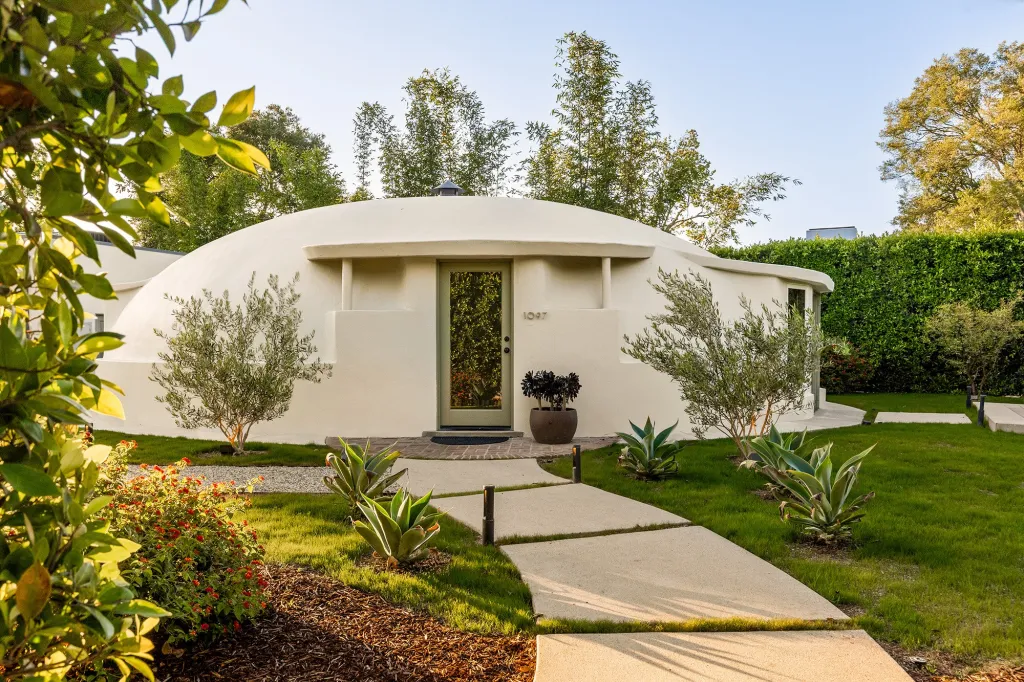
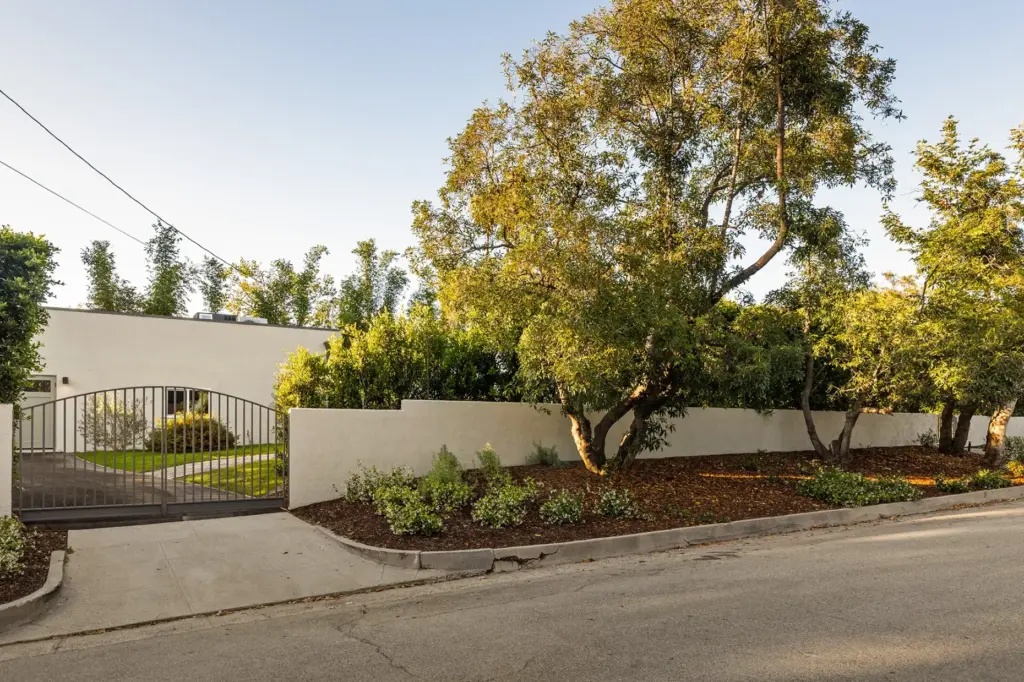
 The walled and gated residence. (Photo by Cameron Carothers)
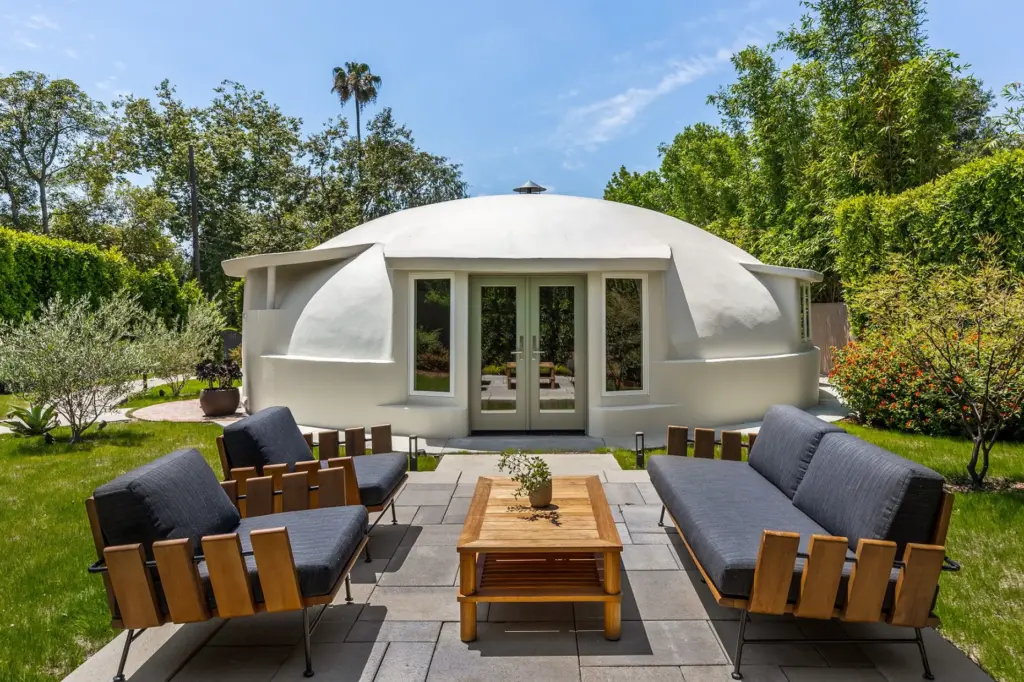 Patio space. (Photo by Cameron Carothers)
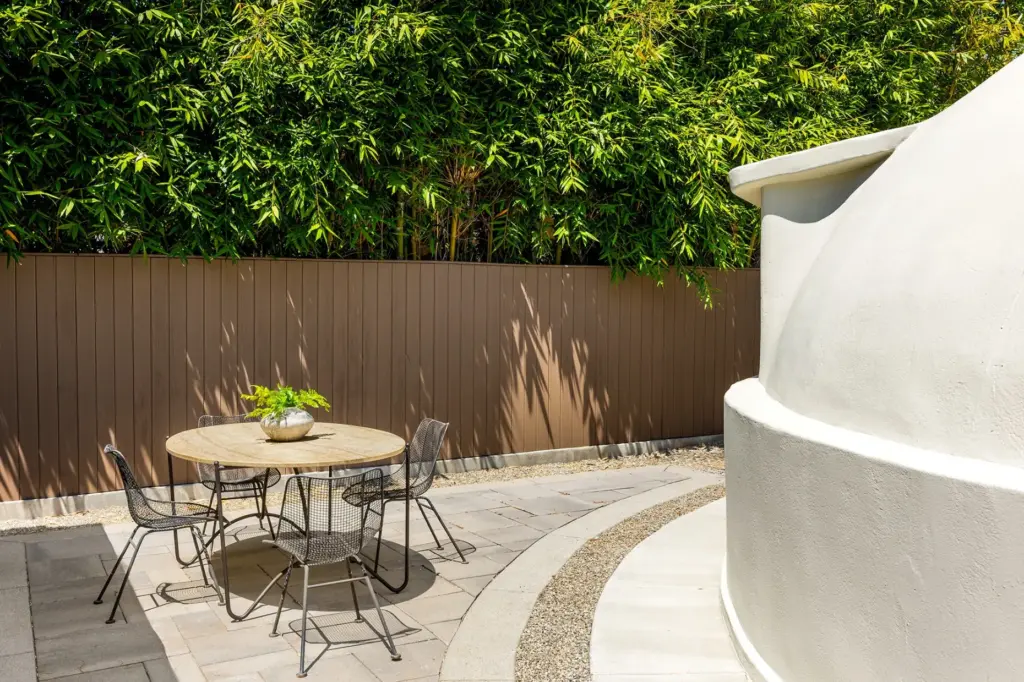 Patio space. (Photo by Cameron Carothers)
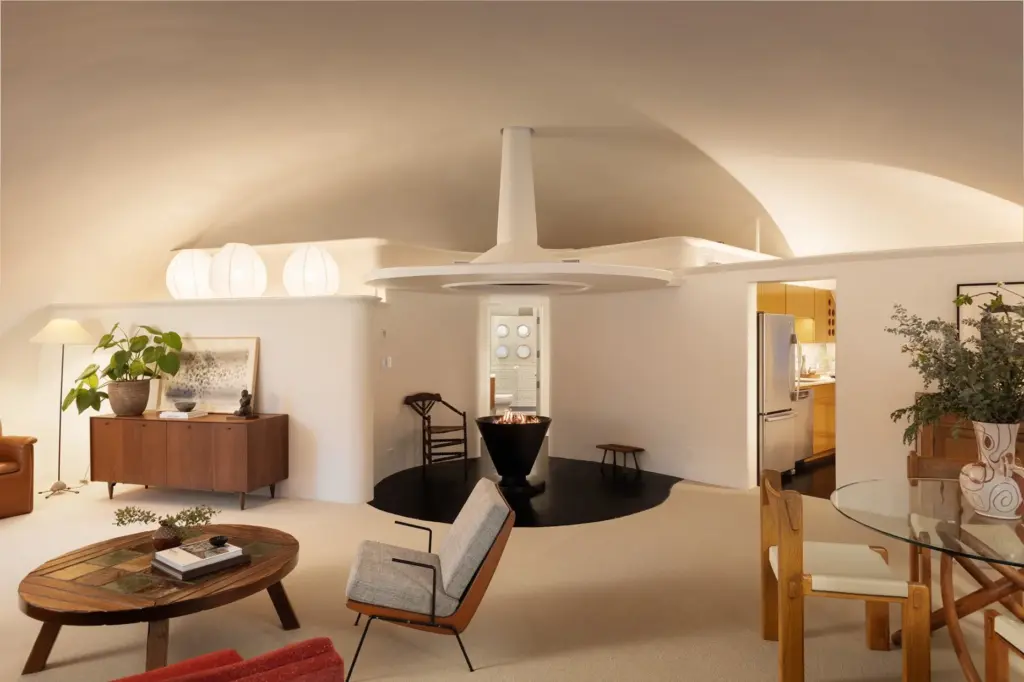 The fireplace anchors the half-circle living room in lauded architect Wallace Neff’s last-surviving Airform house. (Photo by Cameron Carothers)
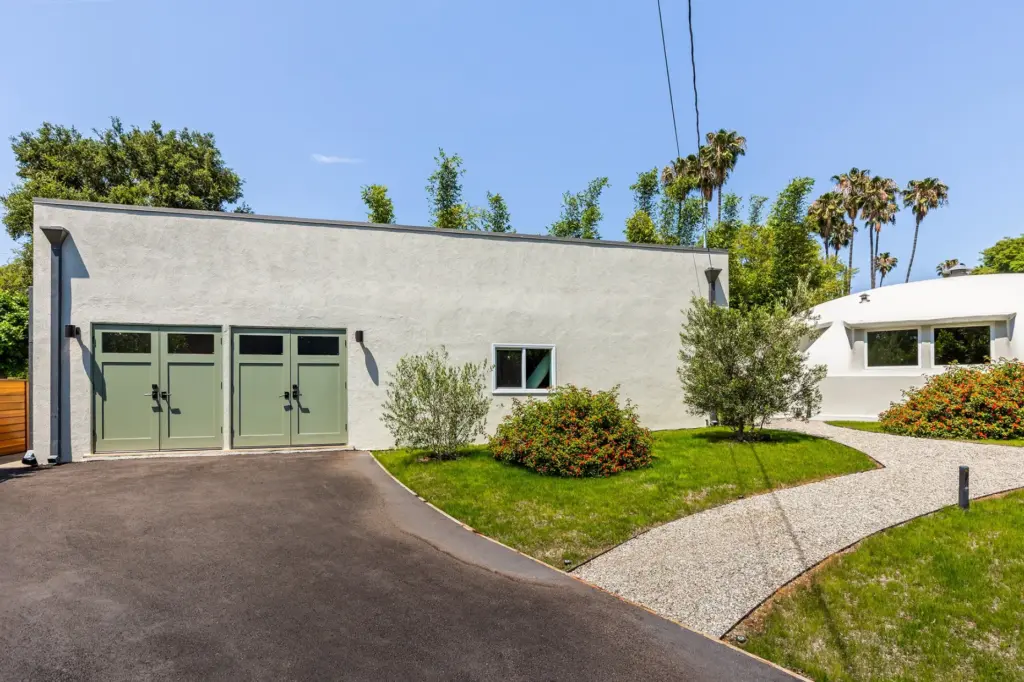 The studio. (Photo by Cameron Carothers)
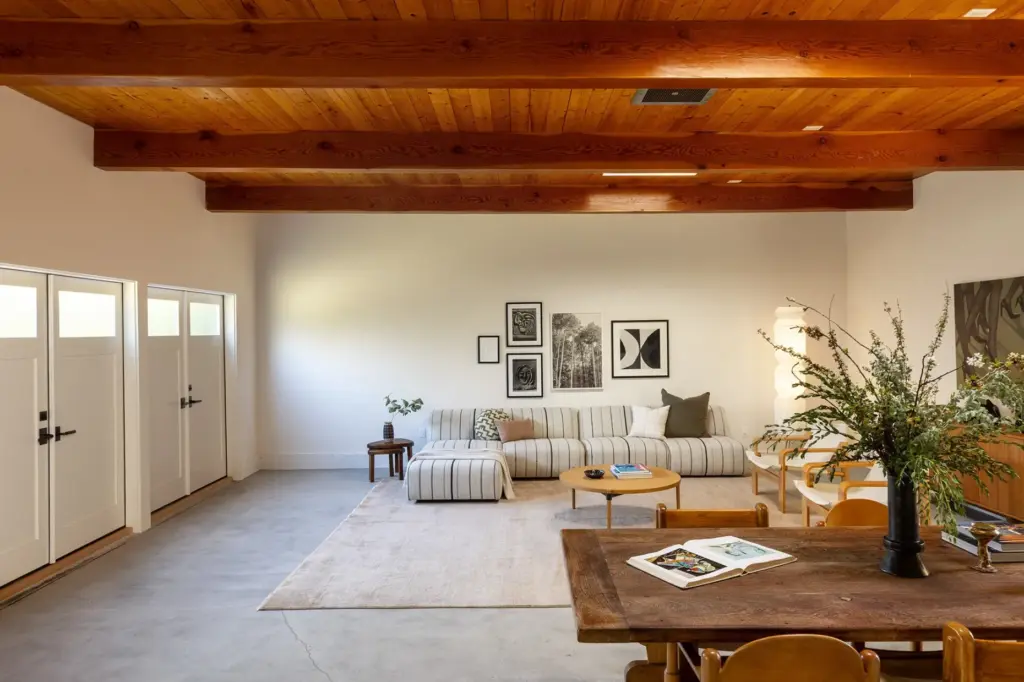 The main living space of the one-bedroom, one-bathroom studio. (Photo by Cameron Carothers)
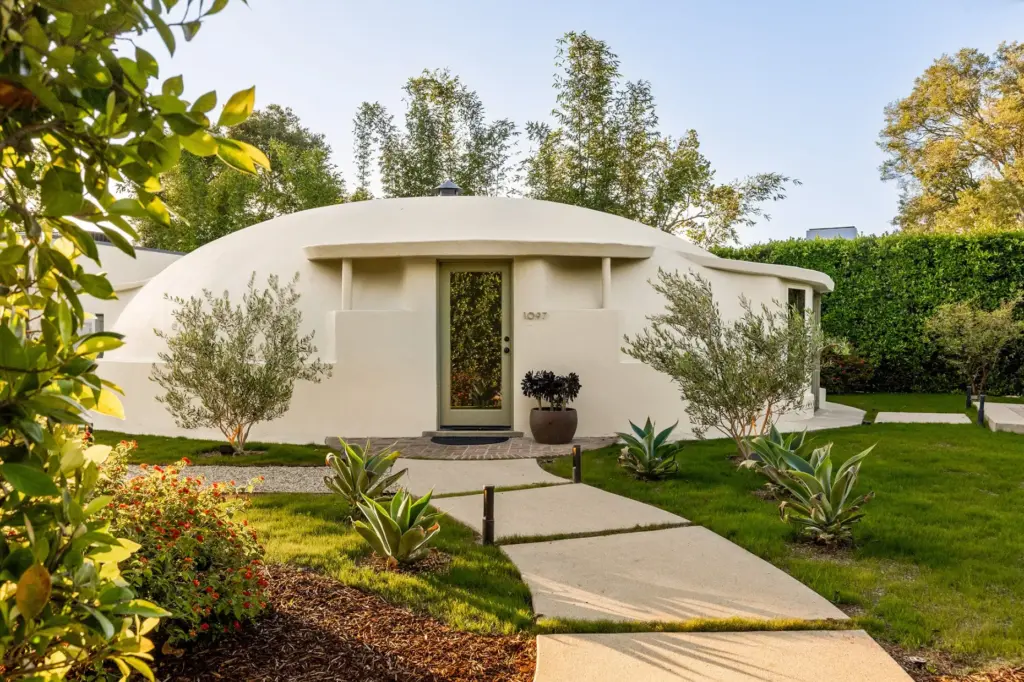 Lauded architect Wallace Neff’s last surviving Airform house is in Pasadena and listed for just under $2 million. (Photo by Cameron Carothers)
With its restoration now complete, the last of lauded architect Wallace Neff’s Airform bubble houses in the United States is on the market in Pasadena for $1.95 million.
Read more Ned Jarrett, NASCAR Hall of Famer, 2-time Cup Series champion and longtime broadcaster, dies at 93
The 1,204-square-foot concrete dome-shaped house marketed as the Wallace Neff Shell House has two bedrooms and one bathroom. As previously reported by the Southern California News Group, Neff built the house for his brother, Andrew.
Completed in 1947, Neff shaped it by spraying concrete onto an inflated rubber balloon covered in steel mesh. The balloon was deflated after the concrete hardened, leaving a shell.
While he famously designed Spanish and Mediterranean revival-style estates for Hollywood’s Golden Age stars, Neff considered his futuristic domes solutions to postwar affordable housing shortages. But the idea didn’t take off.
The only known survivor is the home in Pasadena.
An additional bedroom and bathroom are in in the detached 1,000-square-foot studio featuring an open-plan living space, with submitted ADU plans in process with the city.
About 15 feet below the studio is an underground bomb shelter built using the same Airform technology as the main residence, completed in the 1960s.
For current owners Priya Girishankar and Damon Cleckler, both executives in the media and automotive e-commerce platforms, respectively, taking on the home was “a very intentional decision.”
The couple bought the Neff house for $1.675 million in June 2025 from their late friend’s estate to fulfill his dream of restoring it.
Cleckler described himself and his friend, visual artist and musician Steve Roden, “architectural preservationists at heart,” adding that Roden “was the first to take the plunge” with the Neff home in May 1998.
Sited behind gates on an oversized corner lot near Allendale Park, the Shell House opens into a circular half-circle living room, anchored by an attention-getting fireplace with a floating chimney disc.
“It feels delicately thin and weightless, but it’s incredibly solid,” Cleckler shared by email, explaining it is built of concrete and rebar cantilevered over a four-column concrete plinth at the core of the home.
He also noted the light.
“The reflections on the arch that change throughout the day and keep the space remarkably well lit are particularly nice to me,” Cleckler said. “It’s a bit of a silent kinetic sculpture of sorts, and not something one would imagine from the exterior view.”
Read more Energy Department says advanced nuclear reactor first to reach critical milestone
According to a comprehensive list of improvements provided by the listing agency, the structure and its mechanical infrastructure were thoroughly overhauled from the ground up, inside and out.
Crews removed the living room’s built-in bookshelves after discovering extensive dry rot and trapped moisture, subsequently repairing and reinforcing the wall. They reclaimed the kitchen’s original curve by removing a false wall and replaced a leaking and dry-rot damaged pop-out garden window with a seamless inset design.
The kitchen also features a new gas oven and stove unit, LED lighting and a custom Heath tile backsplash matched to the home’s original aesthetic.
Infrastructure upgrades include a silent, hidden mini-split HVAC system, an electrical sub-panel and attic-routed Wi-Fi to bypass the concrete walls.
The bathroom was also refreshed with a new vanity and shower enclosure.
Outside upgrades include a newly sealed and repainted concrete shell with protected footing. There are two seating areas, including one between the dome and detached studio space.
The gated grounds feature a new asphalt driveway, an irrigation system, steel edging and fresh landscaping.
“But most of the important work was preservation of the structure itself,” Cleckler said. “Repairs to concrete, moisture mitigation and just the removal of unnecessary additions and evolutions over time.”
At some point a few decades ago, the roof of the shell had been penetrated with two large holes, roughly 18 inches in diameter each, to accommodate the HVAC unit that sat on a large steel plinth adjacent to the home.
“With the technology and innovation in climate control, we knew it would be possible to remove the old unit, and convert to a ducted mini-split,” Cleckler said. “This would allow for the shell to return to it’s original glory as a standalone unit, unencumbered by the steampunk-like barnacles of big aluminum tubes, conduit and metal boxes. Not necessarily a tricky effort, but one that was just absolutely necessary.”
George Penner of Compass holds the listing, described in the listing as “a potential Mills Act candidate, if desired.”
“The home is beautiful and it deserved the attention it was lacking,” Cleckler said. “It’s hard to talk about what architecture does for your soul; there’s always something new, something subtle, something sublime. This home is all about these moments.”
Read more One of nation’s biggest composting facilities is sprouting in San Bernardino County
–