
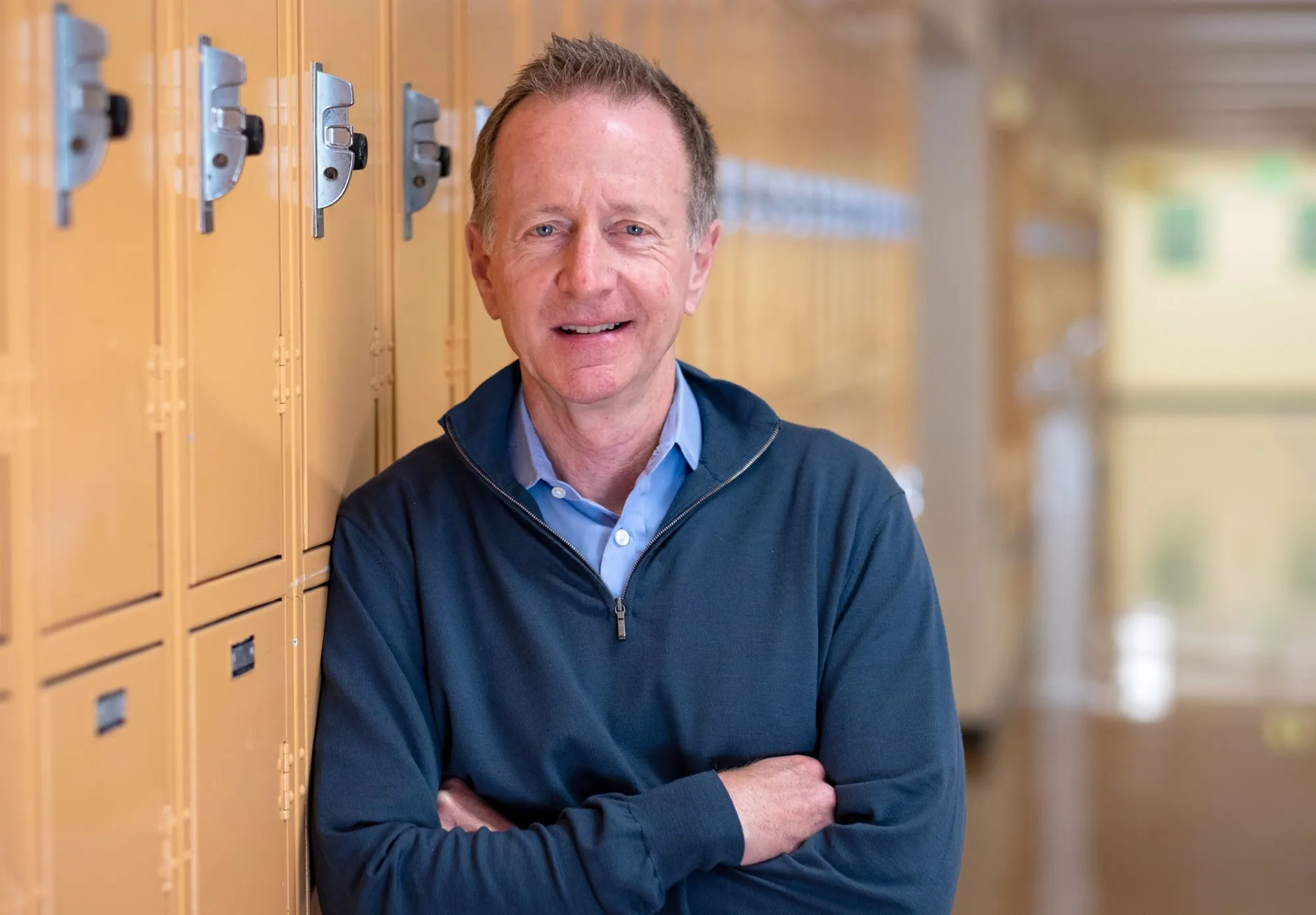
Former LAUSD Superintendent Austin Beutner is suing the insurance company Chubb and accusing it of failing to properly test for and remove toxic contaminants that infiltrated the family’s home during the Palisades fire.
Read more Anaheim hits 100 degrees on Tuesday, marking 4th straight day of record-breaking heat
Beutner’s litigation is the latest in a series of high-profile cases against Chubb from wealthy homeowners in the Pacific Palisades whose homes survived the flames, only to be left uninhabitable by smoke, soot and ash.
The two-year statue of limitations for lawsuits over such claims ends on Jan. 7, 2027.
“It is happening all over the place and what they’re trying to do is hide it, deny it, delay it, so they can kick the can down the road until after January of next year,” Beutner said. “Most people are not even aware of this issue and it will be too late for them.”
The two urban wildfires in the Pacific Palisades and Altadena in January 2025 torched cars and buildings, melted plastics, electronics and household appliances, and spread plumes of heavy metals, cyanide, asbestos and other toxic contaminants. Together, the Palisades and Eaton fires killed at least 31 people, burned roughly 37,000 acres and destroyed 16,000 structures.
The California Department of Insurance estimates more than 13,000 smoke-damage claims have been filed in the aftermath.
Until recently, California lacked clear standards for testing for toxic contaminants and for determining when a home is safe enough for families to return.
Gov. Gavin Newsom signed two bills last month that aim to change that.
AB 1642 requires the Department of Toxic Substances Control, or DTSC, to develop standards for the testing and removal of lead and asbestos in homes affected by wildfires by the end of 2028, and for other dangerous chemicals, including heavy metals, cyanide, lithium, and manganese, by the end of 2029.
The other bill, AB 1795, establishes that if ash, soot and other wildfire byproducts are found in a home in a wildfire impact zone, then any smoke damage is presumed to be a result of the fire.
Neither is retroactive, however.
Beutner’s lawsuit accuses Bankers Standard Insurance Co., a subsidiary of Chubb, of breach of contract and acting in bad faith. The family paid millions of dollars in premiums over 18 years with the provider and had never submitted a claim.
“Disaster struck and the Beutners’ home of over 20 years was ground zero for one of the most devastating wildfires in California’s history,” the lawsuit states. “The Beutners turned to Chubb for coverage. Chubb turned to a cast of shifting adjusters, a playbook of delay tactics, and its network for biased and unqualified consultants to minimize its coverage obligations and breach its contract.”
The wildfire destroyed surrounding homes and structures, but left the family’s home standing. The New York Times listed the home’s value at around $20 million. While Beutner declined to provide an estimate of the damages at this time, he said the home needs to be taken down to the studs and rebuilt.
“It is a toxic waste dump,” he said. “There are extraordinarily high levels of toxic metals throughout the house, in the walls, the attic, in the roof, the ceilings.”
Beutner said the family had never filed a claim in 18 years and initially followed Chubb’s guidance. One early adjuster described it as the “worst house we have seen,” according to the lawsuit.
Chubb did not respond to a request to comment.
The environment testing firm brought in by Chubb did not test for certain heavy metals, or inspect wall or ceiling cavities where the wind may have brought contaminants. It recommended vacuuming and wet-wiping surfaces, while simultaneously warning that inaccessible areas could contain soot, ash and char, according to the lawsuit.
The family went back and forth with Chubb and its experts until it became clear that Chubb intended to “obfuscate the extent of the covered damages through paid preferred vendors,” the lawsuit states.
The family retained three independent environmental consulting firms, which found high levels of lead, arsenic, chromium and lithium. Lead levels registered nearly 1,000 times the level that California deems safe.
Read more Students turn on Cornell’s president over the school’s handling of gang rape allegations
“We kind of expected they would bring in the cavalry,” Beutner said. “Nothing happened, they went into the denial phase.”
Chubb allegedly argued the lithium was naturally occurring, rather than from burning electric vehicles, and blamed the lead levels on lead paint from the 1940s, though the home had undergone a major renovation a decade before the Beutners purchased it.
The company agreed to remove the interior walls and ceilings, then backtracked. After the Beutners submitted estimates from contractors, Chubb offered less than a quarter of what is needed to restore the home, according to the lawsuit.
“Chubb’s actions, and insurers like it, are exposing tens of thousands of people every day to these toxins,” Beutner said.
The new lawsuit follows other high-profile cases.
Jamie McCourt, the former U.S. ambassador to France and former co-owner of the Los Angeles Dodgers, filed a similar lawsuit again a Chubb subsidiary in June. Once it got to court, U.S. District Judge Stephen Wilson recused himself because the “factual dispute in this case is similar to the coverage issue the presiding Judge experienced with Chubb.”
John and Callene Momtazee sued Chubb after paying nearly $100,000 in annual premiums for a high-end insurance policy promising to get the family back to their lives “without hassles, headaches or delays” in the event of catastrophe.
The Momtazees have spent nearly two years fighting Chubb over whether the structure that remains is truly as unscathed as it might look on the surface.
The family argued in a federal lawsuit that their home is a “constructive total loss,” unable to be safely remediated, due to severe contamination left behind by the toxic fallout of the Palisades fire.
Much like the Beutners, they allege Chubb did not sufficiently test their home and attempted to discredit the results of a more thorough, independently commissioned test that found “many hazardous substances above safety levels established by government agencies.” Chubb allegedly used the same consultants in all three cases.
Their litigation demands that Federal Insurance, a subsidiary of Chubb, cut a check for the entire $45 million policy, plus damages. All told, if their attorneys can prove Chubb and Federal acted in bad faith, that payout could stretch to $100 million or more.
The Momtazees’ case is still pending. U.S. District Court Judge Josephine Staton heard motions for summary judgment on Sept. 25 but has yet to issue a ruling. As one of the first filed, it is expected to serve as a bellwether for the others.
In a statement, Brian Timmons, the attorney representing the Momtazees, pointed to the lawsuits as a pattern.
“As the new lawsuits by Austin Buetner and Jamie McCourt show, Chubb’s refusal to address the toxins in the Momtazees’ home was part of a consistent practice designed to minimize Chubb’s liability,” Timmons said. “While these three plaintiffs have taken legal action to prevent this, there are countless other policy holders out there without the resources to fight an insurer as large as Chubb.”
For Beutner, that is why he is speaking out now. He wants to make sure others are aware of the upcoming statute of limitations deadline. If these issues aren’t fixed, he worries that someday Pacific Palisades, or Altadena, will become cancer clusters, he said.
“People are going to get sick, and that shouldn’t be happening,” he said.
He has a challenge for Chubb’s CEO, too.
“He can come and live in my house for a year, and I’ll go live in his,” Beutner said. “He wouldn’t do it.”
Read more Lakers dominate preseason opener vs. Kings as Kessler, Reaves sit with injuries